
A Small Monkey. A Plush Toy. A Global Reaction.
He weighed barely half a kilogram at birth.
He lost maternal bonding within hours.
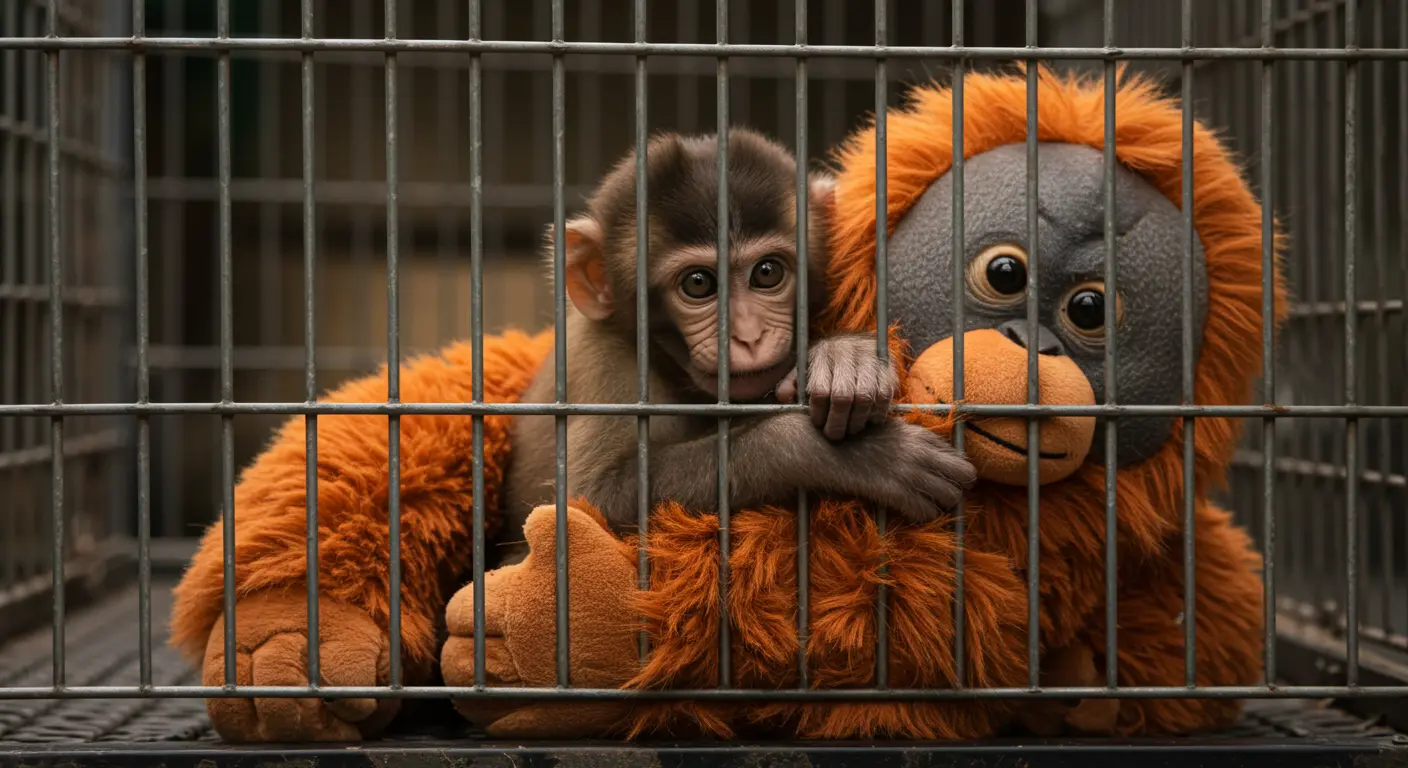
Months later, he was photographed clinging tightly to a plush orangutan inside a metal enclosure.
That image crossed borders faster than most geopolitical headlines.
Why?
In an era saturated with crisis, scandal, and polarization, how did a six-month-old macaque become a global emotional event?
More importantly:
What does this tell us about the architecture of attention in 2026?
The story of Punch-Kun is not just about animal care.
It is about systems.
It is about emotional acceleration.
It is about how vulnerability travels — and why it converts.
This investigation moves beyond sentiment. It examines structure.
Context & Background
Birth, Rejection, and the Biology of Early Attachment
Punch-Kun was born on July 26, 2025, in a regional zoo in Chiba Prefecture, Japan. At approximately 500 grams, he entered a world where the first hours of life determine more than survival.
In primate development science, early maternal contact regulates:
-
Cortisol (stress hormone) levels
-
Thermoregulation stability
-
Early motor coordination
-
Social imprinting patterns
-
Emotional resilience pathways
When first-time mothers experience stress, exhaustion, or environmental disruption, maternal rejection can occur. This is not rare in captive settings, though it remains deeply consequential.
For Punch-Kun, rejection meant immediate intervention.
Caretakers initiated hand-rearing — a controlled protocol designed to:
-
Ensure nutritional survival
-
Limit excessive human imprinting
-
Simulate maternal sensory stimuli
-
Prepare eventual reintegration into a troop
But science cannot fully replace biological bonding.
Attachment behaviors still seek expression.
The infant must cling.
The Substitution Object
Why the Plush Orangutan Mattered
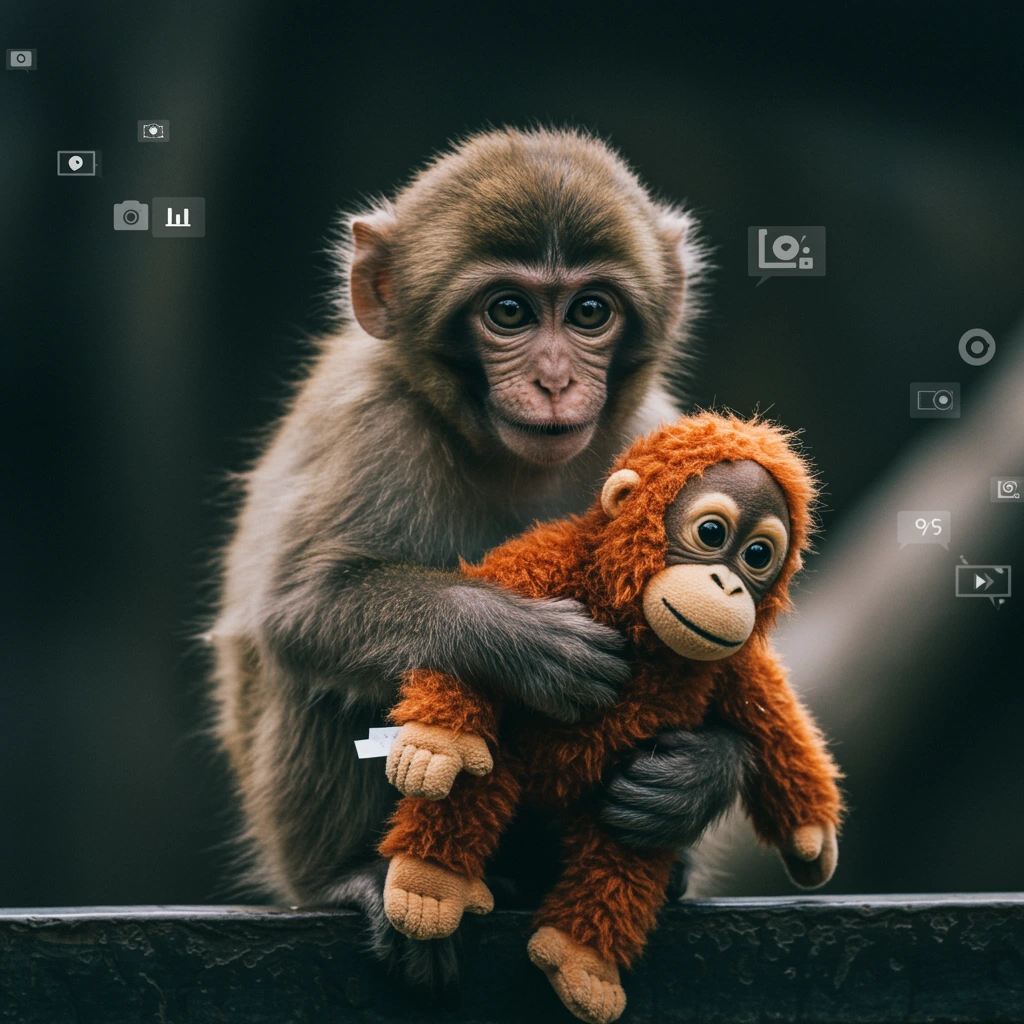
Zoo staff introduced various objects to provide tactile comfort:
-
Rolled towels
-
Faux fur cushions
-
Smaller stuffed animals
Punch-Kun rejected most.
He consistently returned to a large plush orangutan.
From a behavioral lens, the selection was rational:
-
Dense fur texture allowed secure gripping
-
Body mass approximated maternal volume
-
Primate-like facial symmetry increased familiarity
Attachment substitution in mammals is well documented. Separated infants often seek soft, warm, graspable objects.
But once photographed, the plush toy transcended function.
It became symbol.
The monkey was no longer adapting.
He was “lonely.”
He was “abandoned.”
He was “heartbroken.”
Anthropomorphic storytelling began shaping perception.
The Viral Trigger
When One Image Activates Millions
The photograph that catalyzed global attention contained precise emotional architecture:
-
Visible metal enclosure (cold environment contrast)
-
Small body posture (defensive vulnerability)
-
Tight bilateral grip (cling reflex)
-
Large forward-facing eyes (infant schema trigger)
-
Surrogate “mother” figure (narrative substitution cue)
In psychological terms, it activated Baby Schema Response — an evolved caregiving reflex in humans triggered by infantile traits.
In platform terms, it activated shareability.
The image required no translation.
No context.
No political framing.
It was universally legible.
That is algorithmic perfection.
Red Flag Signals
Structural Incentives Behind Emotional Amplification
Compassion is genuine.
But systems are strategic.
Key structural observations:
• The emotional framing spread faster than behavioral context
• Headlines emphasized “orphaned” over scientific nuance
• International outlets recycled simplified narratives
• Engagement metrics reportedly surged within hours
• Zoo visibility increased dramatically
This does not imply malicious intent.
But it reveals alignment:
Emotion generates attention.
Attention generates reach.
Reach generates value.
The 2026 attention economy does not require manipulation — it rewards emotional clarity automatically.
The Psychology of Global Reaction
Why did adults across continents respond intensely to a macaque?
Three intersecting drivers explain the phenomenon.
1. Evolutionary Caregiving Reflex
Infant-like features activate neural circuits associated with protection and empathy. Studies in social neuroscience confirm increased oxytocin release when exposed to vulnerable infant imagery.
Punch-Kun’s proportions triggered that reflex.
2. Anthropomorphic Projection
Humans instinctively project internal narratives onto non-human agents.
Viewers saw:
-
A child separated from a mother
-
A metaphor for abandonment
-
A reflection of personal loneliness
Projection personalizes the event.
3. Emotional Safe Haven
In 2026, audiences experience:
-
Chronic geopolitical uncertainty
-
Economic instability
-
Information fatigue
-
Polarized discourse
A monkey holding a plush toy offers sadness without conflict.
It allows safe emotional discharge.
No ideological tension.
No moral debate.
Just contained vulnerability.
Media Architecture in 2026
The Rise of Micro-Emotional Events
Punch-Kun exemplifies a growing pattern:
Micro-emotional events outperform macro-political crises in engagement duration.
Why?
Because they:
-
Cross language barriers effortlessly
-
Avoid political polarization
-
Require minimal cognitive load
-
Offer instant emotional clarity
The modern feed prioritizes immediacy over complexity.
Complex stories fragment audiences.
Simple emotional visuals unify them.
Strategic Intelligence Insight
Emotional Virality as Infrastructure
This case demonstrates five systemic realities:
-
Platforms favor emotionally digestible content.
-
Non-polarizing sadness scales faster than outrage.
-
Animal narratives serve as neutral empathy carriers.
-
Institutions can benefit unintentionally from virality.
-
Audiences rarely question emotional acceleration.
This is not conspiracy.
It is structural convergence.
When biological triggers align with algorithmic preference, amplification becomes inevitable.
Economic Layer
The Monetization of Visibility
Viral attention converts into tangible outcomes:
-
Increased zoo visitation
-
Merchandise interest
-
Social media growth
-
Potential sponsorship opportunities
-
Brand recognition expansion
Again, this does not imply exploitation.
But attention has measurable economic value.
Emotional virality is an asset.
The question becomes:
Where is the line between awareness and commodification?
Data & Behavioral Evidence
Empirical research supports key elements of this case:
-
Infant-like facial structures increase perceived cuteness ratings significantly.
-
Posts featuring animals consistently outperform neutral informational posts in engagement studies.
-
Emotional imagery increases sharing probability compared to text-only content.
-
Low-conflict narratives maintain longer feed visibility.
Punch-Kun’s image aligned perfectly with these dynamics.
The Integration Phase
Biology Versus Narrative
On January 19, 2026, Punch-Kun was introduced into a troop of 56 macaques.
Troop integration represents the most critical rehabilitation stage.
Potential risks:
-
Dominance aggression
-
Social exclusion
-
Stress-induced behaviors
-
Delayed grooming bonds
Initial reports suggested cautious reception but steady physical growth and increasing interaction.
However, digital audiences tend to follow simplified arcs:
Rescue → Struggle → Triumph.
Real biology is rarely that linear.
Narratives crave resolution.
Behavioral development does not operate on trending timelines.
Ethical Crossroads
When Compassion Meets Platform Logic
Ethical tension emerges at three levels:
Institutional Ethics
Is storytelling focused on welfare education — or engagement maximization?
Platform Ethics
Do algorithms amplify emotional content regardless of context?
Audience Ethics
Are we engaging responsibly — or reacting impulsively?
The core red flag is not empathy.
It is unconscious emotional participation.
When millions share before verifying, context becomes secondary.
The Broader Pattern
Emotional Economy Expansion
Punch-Kun is not isolated.
Recent years have seen viral animal narratives dominate digital cycles.
Common characteristics:
-
Vulnerable subject
-
Clear emotional arc
-
Visual clarity
-
Non-political framing
-
Shareable innocence
These stories function as emotional stabilizers within volatile information ecosystems.
They are psychological rest stops.
But rest stops can become revenue hubs.
Scenario Analysis
Where This Story Goes Next
Scenario 1: Healthy Integration
Gradual reduction in toy dependency.
Stable troop bonding.
Narrative shifts toward resilience success.
Scenario 2: Prolonged Dependency
Extended attachment to surrogate object.
Partial integration.
Mixed behavioral adaptation.
Scenario 3: Social Complication
Chronic stress markers.
Limited grooming reciprocity.
Behavioral challenges.
Digital audiences will likely prefer Scenario 1.
Biology remains independent of audience preference.
Constructive Solutions
A Responsible Empathy Framework
For Readers:
• Pause before sharing emotionally charged images
• Seek original context and updates
• Avoid exaggerated humanization
• Support credible wildlife welfare initiatives
• Recognize algorithmic influence
For Institutions:
• Provide transparent behavioral updates
• Avoid overly sentimental framing
• Emphasize educational value
• Separate welfare communication from promotional tone
For Platforms:
• Encourage contextual linking
• Reduce incentive distortion for emotional extremity
Empathy should be conscious.
Not commodified.
Pull Quote Highlight
“In the attention economy, vulnerability does not just move hearts — it moves systems.”
Infographic Concept
Title: “From Zoo to Global Feed: The Punch-Kun Amplification Chain”
Sections:
• Timeline of events
• Psychological triggers activated
• Platform distribution path
• Economic impact flow
• Ethical checkpoint model
Community Poll Question
“When you first saw Punch-Kun holding the plush toy, what dominated your reaction?”
!!!!!A) Protective instinct
B) Emotional sadness
C) Curiosity
D) Media skepticism
Empowering Conclusion
The Story Behind the Story
Punch-Kun searched for something to hold.
The world searched for something to feel.
In a volatile global environment, his image provided controlled vulnerability — a grief without division.
But beneath that tenderness lies structural truth:
Emotion scales.
Algorithms optimize.
Attention converts.
The red flag is not compassion.
It is passive participation in emotional economies we do not examine.
We can feel deeply.
We can care authentically.
But we must also think critically.
When empathy becomes conscious, it becomes power — not currency.
Punch-Kun may one day release the plush toy.
The deeper question is whether we will release unexamined virality.
Commentaires
Laisser un commentaire