
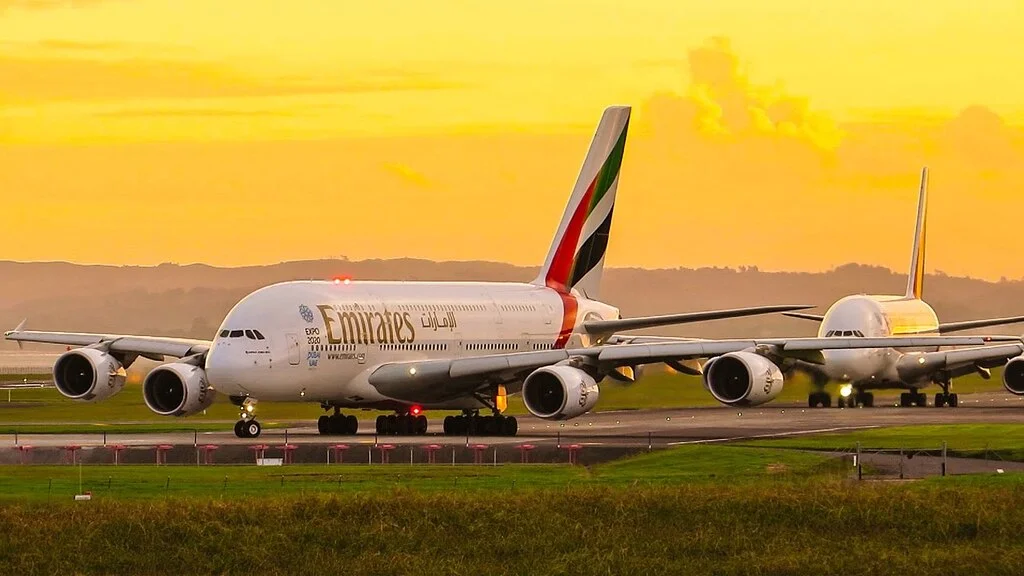
Dubai International Airport: The Strategic Gateway Powering Global Travel, Trade, and the Future of Aviation
Dubai Universal Air terminal is more than a transportation hub. It is one of the most powerful engines of global mobility in the modern world. Positioned between Europe, Asia, and Africa, the airport has become one of the busiest international travel centers ever built, moving tens of millions of passengers and massive volumes of cargo every year.
Its rise is not accidental. It is the result of a long-term national strategy, massive infrastructure investment, and a deep understanding of how global transportation networks shape economic power.
What began as a modest airstrip carved into the desert has evolved into a symbol of ambition, innovation, and global connectivity. Today Dubai International Airport stands as a central artery of the world’s aviation system—linking cities, cultures, economies, and industries across continents.
To understand the significance of Dubai International Airport, one must look beyond the terminals and runways. The real story lies in how Dubai transformed geography into opportunity and aviation into one of the most powerful drivers of its economic success.
The Early Vision Behind Dubai’s Aviation Strategy
In the early 1960s, Dubai was far from the global metropolis it is today. The city was a small trading hub along the Persian Gulf, known primarily for its ports, traditional markets, and maritime commerce.
Oil had been discovered, but reserves were relatively limited compared with neighboring Gulf states such as Saudi Arabia and Kuwait. Dubai’s leadership quickly realized that long-term prosperity could not depend solely on natural resources.
Instead, the emirate would need to build a diversified economy centered on trade, logistics, tourism, and financial services.
Aviation became a central piece of this strategy.
Dubai’s geographic location offered a powerful advantage. Situated between Europe and Asia, the city lies within an eight-hour flight of nearly two-thirds of the global population. This meant that travelers flying between continents could potentially connect through Dubai with minimal detours.
Recognizing this opportunity, Dubai’s leaders invested in aviation infrastructure long before the city had the passenger demand to justify such expansion.
The first airport runway was constructed in 1960 using compacted sand. Although modest in scale, it marked the beginning of a bold vision: turning Dubai into a global aviation crossroads.
Over the following decades, runways were upgraded, terminals expanded, and international airlines encouraged to use Dubai as a stopover destination.
The seeds of a future aviation powerhouse had been planted.
The Creation of Emirates Airline and the Hub Strategy
A decisive turning point came in 1985 with the launch of Emirates Airline.
Unlike many national carriers that focused primarily on regional travel, Emirates adopted an ambitious global strategy from the beginning. The airline aimed to build a vast network connecting major cities across multiple continents through a single hub—Dubai.
This model, known as the hub-and-spoke system, allowed passengers traveling long distances to transfer through one central airport rather than relying on direct flights between every city pair.
For example, travelers flying from London to Sydney could connect through Dubai rather than taking multiple regional flights. Similarly, passengers traveling between Africa and Southeast Asia could route through the same hub.
This strategy dramatically expanded the airport’s relevance within global aviation networks.
Emirates invested heavily in long-haul aircraft capable of flying between distant continents. As the airline expanded its fleet and routes, passenger traffic through Dubai increased rapidly.
The growth of Emirates and the expansion of Dubai International Airport became deeply intertwined. Each fueled the success of the other.
The Infrastructure Revolution
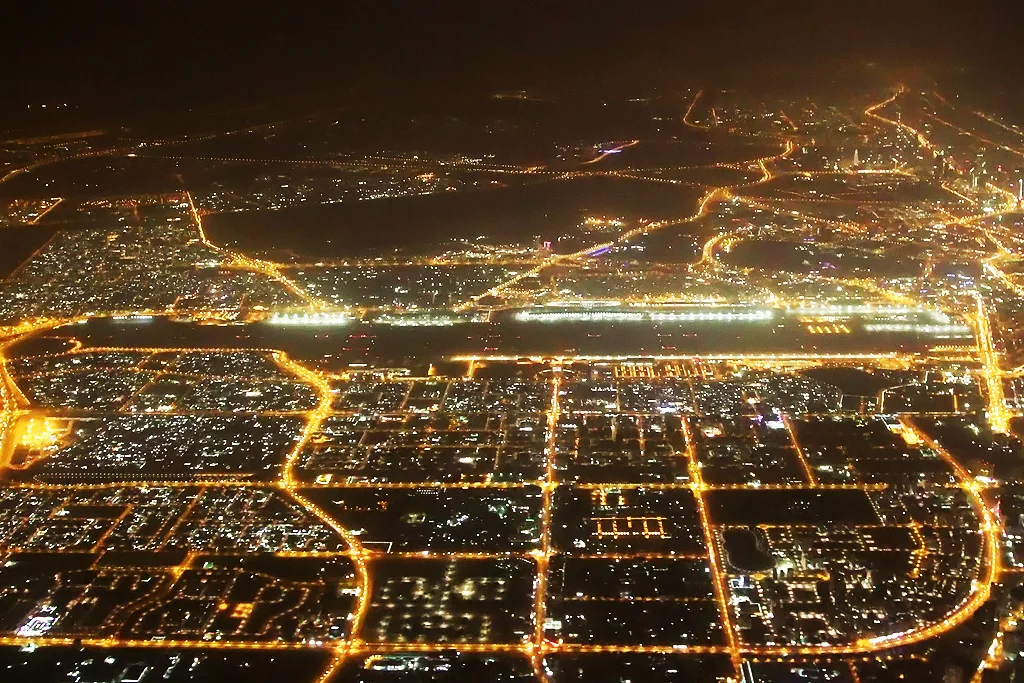
As passenger numbers increased, Dubai began constructing one of the most sophisticated airport infrastructures in the world.
New runways were added to accommodate growing flight traffic. Massive terminals were built to handle millions of travelers each year. Cargo facilities expanded to support global logistics operations.
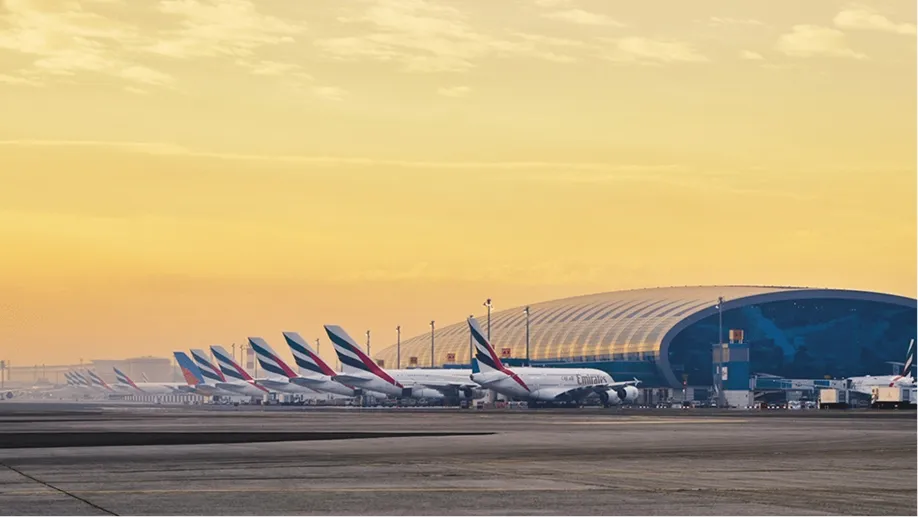
Terminal 3, opened in 2008, became one of the largest airport terminals ever constructed. Designed primarily for Emirates Airline, the terminal features enormous concourses capable of handling wide-body aircraft such as the Airbus A380.
The airport also introduced advanced baggage handling systems capable of processing thousands of bags per hour.
Dubai International Airport now includes multiple terminals, specialized concourses, extensive cargo areas, and one of the most advanced aviation infrastructures in existence.
But the airport was designed to do more than simply move passengers efficiently.
It was designed to impress.
Luxury lounges, expansive duty-free shopping areas, fine dining restaurants, and relaxation spaces transformed the airport into a destination in itself.
Travelers passing through Dubai often experience a level of comfort and service rarely found in traditional transit airports.
This emphasis on hospitality reflects Dubai’s broader brand as a global center of luxury tourism and business.
Becoming the World’s Busiest International Airport
By the early 2010s, Dubai International Airport had reached a remarkable milestone: it became the busiest airport in the world for international passenger traffic.
Millions of travelers from every corner of the globe began passing through its terminals each year.
The airport serves as a gateway for routes connecting Europe with Asia, Africa with North America, and Australia with the Middle East.
Its central geographic position allows airlines to operate efficient long-haul routes while minimizing travel time for passengers.
At its peak before the COVID-19 pandemic, Dubai International Airport handled nearly ninety million passengers annually.
This level of traffic placed it ahead of many airports located in far larger cities and countries.
The achievement reflected the success of Dubai’s long-term aviation strategy.
The Economic Power of Aviation
Dubai International Airport is far more than a travel hub. It is a critical driver of the emirate’s economy.
Tourism represents one of the most significant sectors supported by the airport. Millions of visitors arrive in Dubai every year to experience its hotels, shopping districts, beaches, and cultural attractions.
Major events such as international exhibitions, sporting tournaments, and business conferences also rely on the airport’s connectivity.
Without its aviation infrastructure, Dubai’s tourism industry would be far smaller.
The airport also supports a vast logistics and cargo network.
High-value goods—including electronics, pharmaceuticals, luxury products, and industrial components—are transported through Dubai’s air freight facilities.
The speed of air cargo allows businesses to move products quickly between manufacturing centers and consumer markets.
This capability has helped transform Dubai into one of the world’s leading trade hubs.
Retail also plays a major role within the airport’s ecosystem.
Dubai Duty Free has become one of the most successful airport retail operations globally, generating billions in annual sales.
Passengers passing through the airport often spend time shopping for luxury items, electronics, cosmetics, and souvenirs.
This retail activity contributes significantly to Dubai’s overall economy.
Technology and Passenger Experience
Operating one of the world’s busiest airports requires sophisticated technology.
Dubai International Airport has invested heavily in digital systems designed to streamline passenger journeys.
Automated check-in kiosks allow travelers to process boarding passes quickly. Biometric smart gates speed up immigration procedures by using facial recognition and digital identity verification.
Advanced air traffic control systems ensure that aircraft movements remain safe and efficient even during peak traffic periods.
The airport’s baggage handling infrastructure is among the most advanced in the world.
Thousands of bags move through automated conveyor systems every hour, ensuring that luggage reaches the correct aircraft on time.
Technology also plays a role in improving passenger comfort.
Mobile applications provide real-time updates about flights, gate changes, and boarding schedules.
Digital signage and multilingual announcements help travelers navigate the airport easily.
These innovations contribute to a smoother travel experience for millions of passengers.
The Impact of the Pandemic
The COVID-19 pandemic created one of the most severe crises in the history of aviation.
Global travel came to a sudden halt as governments imposed restrictions and airlines grounded flights.
Dubai International Airport experienced a dramatic decline in passenger traffic during 2020.
However, the airport adapted quickly.
Health protocols were introduced, including temperature screenings, sanitation measures, and social distancing guidelines.
Airlines gradually resumed flights as travel restrictions eased.
By 2022 and 2023, passenger demand had begun to recover strongly.
Dubai once again became one of the busiest international transit points as travelers returned to global tourism and business travel.
The recovery demonstrated the resilience of aviation and the continued importance of major hub airports.
Competition Among Global Aviation Hubs
Despite its success, Dubai International Airport faces increasing competition.
Several major cities have invested heavily in airport infrastructure designed to attract international travelers.
Istanbul’s new airport, for example, has been built to handle enormous passenger volumes.
Doha’s Hamad International Airport has positioned itself as a premium transit hub.
Singapore’s Changi Airport continues to expand its facilities and technological innovations.
Each of these airports aims to capture a share of global passenger traffic.
To remain competitive, Dubai must continue evolving.
This includes expanding capacity, improving passenger experience, and maintaining strong airline partnerships.
Sustainability and the Future of Aviation
Environmental sustainability is becoming one of the most important challenges for the aviation industry.
Aircraft emissions contribute to global carbon output, prompting governments and regulators to push for cleaner technologies.
Airlines and airports are exploring solutions such as sustainable aviation fuels, improved aircraft efficiency, and new propulsion systems.
Dubai International Airport has begun implementing energy-efficient operations and exploring partnerships that support environmental initiatives.
Future aircraft designs may include electric or hydrogen-powered engines capable of reducing emissions significantly.
Airports that adapt to these technologies will play a crucial role in shaping the future of sustainable aviation.
The Rise of Al Maktoum International Airport
Dubai’s aviation ambitions extend beyond its current airport.
A second massive facility, Al Maktoum International Airport, is under development as part of the Dubai South project.
When fully completed, this airport could become one of the largest aviation hubs in the world.
Plans include multiple runways, enormous passenger terminals, and vast cargo handling areas.
The new airport is designed to accommodate future travel demand as global passenger numbers continue to grow.
Eventually, it may surpass Dubai International Airport as the emirate’s primary aviation gateway.
The Symbol of a Global City
Dubai International Airport represents more than infrastructure.
It symbolizes the transformation of Dubai from a small trading port into a global metropolis.
Every aircraft landing on its runways brings travelers, ideas, and economic opportunities from around the world.
The airport connects cultures, supports trade, and enables tourism on an enormous scale.
Its success demonstrates how strategic planning and long-term investment can reshape the destiny of a city.
What began as a simple runway in the desert has evolved into one of the most powerful transportation hubs on Earth.
And as global travel continues to expand, Dubai International Airport will remain at the center of the world’s aviation network—linking continents, powering economies, and shaping the future of international mobility.
Commentaires
Laisser un commentaire