
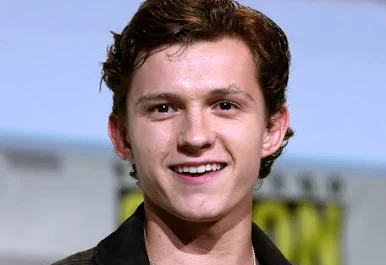
Global fame can arrive overnight—but surviving it is another story.
Few modern actors embody this paradox more clearly than Tom Holland. In less than a decade, the British performer transformed from a promising theater talent into one of the most recognizable faces in global cinema. Millions know him as Spider-Man, the energetic hero swinging across skyscrapers in the Marvel Cinematic Universe.
But fame at such speed comes with a hidden cost.
Behind the headlines celebrating box-office success lies a far more complex reality: the psychological pressure of global attention, the industrial machinery of Hollywood franchises, and the strategic decisions that can define—or derail—an actor’s long-term career.
Tom Holland’s story is not just about stardom. It is a case study in the modern entertainment economy.
It reveals how Hollywood builds global icons, how young actors navigate overwhelming expectations, and why the entertainment industry must increasingly confront the risks that come with celebrity culture in the digital age.
From London Theater to Global Cinema
Tom Holland’s journey into acting began far from Hollywood.
Born in London in 1996, he grew up in a creative household. His father, Dominic Holland, was a comedian and writer, while his mother worked as a photographer. This environment exposed him to artistic expression early in life.
However, Holland’s first major talent was not acting—it was dance.
He studied at the BRIT School for Performing Arts and later joined the cast of the West End production of Billy Elliot the Musical. The role required extraordinary physical discipline, combining ballet, acting, and emotional storytelling.
Performing on stage night after night gave Holland something rare among young actors: professional resilience.
Theater builds stamina, precision, and the ability to perform under pressure. These skills would later become critical when Holland entered the high-stakes world of blockbuster filmmaking.
His breakthrough into cinema came in 2012 with the disaster drama The Impossible, where he starred alongside Naomi Watts and Ewan McGregor. Critics immediately noticed his performance.
At just sixteen years old, Holland demonstrated emotional depth that many actors take years to develop.
The film earned him multiple awards and quietly signaled that Hollywood had discovered a serious young talent.
What few people predicted at the time was just how quickly his career would accelerate.
The Spider-Man Turning Point
Every generation of actors has a defining role.
For Tom Holland, that role arrived in 2015 when he was cast as Spider-Man in the Marvel Cinematic Universe.
The decision was enormous.
Spider-Man is one of the most recognizable characters in global entertainment history. Previous portrayals by Tobey Maguire and Andrew Garfield had already shaped audience expectations.
Taking on the role meant stepping into a legacy.
But Marvel Studios wanted something different.
They wanted a Spider-Man who felt authentically young—someone who could portray both the awkward humor and emotional vulnerability of Peter Parker.
Holland fit the vision perfectly.
His first appearance as Spider-Man in Captain America: Civil War immediately captured audience attention. The character’s energy, humor, and physical agility revitalized the franchise.
Soon after, Holland led his own Spider-Man films, including Spider-Man: Homecoming, Far From Home, and No Way Home.
The results were staggering.
Spider-Man: No Way Home alone generated nearly two billion dollars at the global box office, becoming one of the most successful films in cinematic history.
At that point, Tom Holland was no longer simply an actor.
He was a global brand.
The Franchise Machine
Hollywood franchises are powerful engines.
They generate billions in revenue, create massive fan communities, and shape the cultural landscape. But they also place enormous pressure on the actors who carry them.
Franchise stars often face a paradox.
The role that makes them famous can also trap them.
Audiences may struggle to see them as anything other than the character they portray. This phenomenon—often called typecasting—has shaped the careers of many actors before Holland.
For example, actors who played iconic superheroes in the past sometimes found it difficult to transition into dramatically different roles.
Tom Holland appears aware of this risk.
In interviews, he has repeatedly emphasized his desire to explore diverse roles outside the Marvel universe.
Films like The Devil All the Time, Cherry, and Uncharted reflect that effort.
Each project represents a strategic attempt to demonstrate range.
However, escaping the gravitational pull of a global franchise is never simple.
The Marvel Cinematic Universe remains one of the most dominant entertainment ecosystems ever created.
For an actor associated with it, the benefits are enormous—but so are the expectations.
The Psychological Pressure of Fame
Modern celebrity operates at a scale unimaginable just two decades ago.
Social media has turned actors into constantly visible public figures. Every interview, photo, or comment can travel across the internet within minutes.
For young actors, this environment can be overwhelming.
Tom Holland has spoken openly about the pressures of fame, including the constant scrutiny of his personal life and the expectations placed on him by millions of fans.
In one interview, he described moments when stepping away from social media became necessary to protect his mental health.
This decision reflects a broader conversation happening across the entertainment industry.
Mental health challenges among actors, musicians, and influencers have become increasingly visible in recent years.
The combination of fame, public criticism, and relentless schedules can create intense psychological stress.
Holland’s willingness to discuss these challenges has resonated with many fans who see him as refreshingly honest in an industry often built on polished public images.
The Business of Celebrity
Beyond acting, Tom Holland’s career also illustrates the business dimension of modern fame.
Today’s actors are not only performers—they are brands.
Their names influence marketing campaigns, product endorsements, and global promotional tours.
For major studios, casting decisions are partly strategic calculations.
An actor who connects strongly with audiences can significantly increase a film’s commercial success.
Tom Holland’s popularity among younger audiences has made him particularly valuable within this ecosystem.
His collaborations with fashion brands, charitable organizations, and entertainment companies demonstrate how celebrity identity can extend far beyond the screen.
However, managing such a brand requires careful strategy.
A single controversy can damage years of reputation building.
This is why many actors maintain highly structured public relations teams and communication strategies.
The goal is simple: maintain credibility while sustaining audience engagement.
The Next Phase of Tom Holland’s Career
The biggest challenge facing Tom Holland now is evolution.
Actors who achieve early success must eventually redefine themselves if they want long-term careers.
Some manage this transition brilliantly.
Leonardo DiCaprio, for example, evolved from teenage heartthrob to respected dramatic actor. Robert Downey Jr. transformed from troubled star to one of Hollywood’s most beloved figures.
For Holland, the path forward will likely involve a careful balance between blockbuster projects and more experimental roles.
His performance choices over the next decade will determine how the industry ultimately defines him.
Will he remain primarily associated with Spider-Man?
Or will he emerge as one of the most versatile actors of his generation?
The answer depends on the roles he chooses—and the risks he is willing to take.
The Future of Young Hollywood Stars
Tom Holland’s career also reflects a larger shift in Hollywood.
Studios increasingly search for actors who can connect with global audiences across multiple platforms.
This means performers must combine acting ability with digital presence, media awareness, and personal authenticity.
In many ways, the modern actor must function as both artist and entrepreneur.
Those who succeed understand how to navigate both worlds.
Tom Holland appears to be learning that balance.
His openness about personal challenges, his strategic film choices, and his continued commitment to craft suggest a young actor determined to build a career that extends far beyond a single role.
Conclusion: More Than a Superhero
To millions of viewers, Tom Holland will always be Spider-Man.
But reducing his story to a superhero costume misses the deeper narrative.
His journey represents a new generation of performers navigating fame in a hyperconnected world.
It is a story about talent meeting opportunity—but also about pressure, expectations, and the complex machinery of the entertainment industry.
The real question is not whether Tom Holland has already achieved success.
That much is obvious.
The real question is what kind of actor—and what kind of public figure—he will choose to become next.
Because in Hollywood, the first act of fame is often just the beginning of a much longer story.
Commentaires
Laisser un commentaire