

The relationship between Iran and the United States has long been described as a frozen rivalry—tense, hostile, but ultimately contained. For decades, analysts believed both sides understood the boundaries. Sanctions replaced invasions. Proxy groups replaced direct confrontation. Cyber operations replaced air campaigns. Escalation existed, but it was calibrated.
In 2026, that calibration appears increasingly fragile.
This is not yet a declared war. There are no formal ultimatums broadcast to the world. But beneath the diplomatic language, a layered escalation is unfolding—military positioning, cyber activity, energy leverage, proxy activation, and strategic rhetoric all intensifying simultaneously.
The red flag is not a single dramatic event.
The red flag is convergence.
When multiple pressure points activate at once, the probability of miscalculation rises sharply. And history shows that miscalculations, not intentions, often ignite conflicts.
A Historical Fault Line That Never Closed
The fracture between Tehran and Washington dates back to the 1979 Iranian Revolution. The overthrow of the Shah and the subsequent hostage crisis entrenched mutual distrust. Since then, relations have oscillated between sanctions, covert confrontation, and intermittent diplomacy.
The nuclear issue became the central battleground in the 2000s. The 2015 nuclear agreement temporarily reduced tensions. Its collapse, however, reopened strategic competition. Sanctions returned. Enrichment resumed. Military signaling intensified.
For years, the conflict remained indirect. Iran projected influence through regional allies and proxy groups. The United States maintained military presence across the Gulf and reinforced alliances with Israel and Gulf states.
But structural tensions never disappeared.
They accumulated.
Military Signaling in 2026: Deterrence Under Stress
Military deterrence functions on perception. Each side must believe escalation would be too costly.
In 2026, the Persian Gulf has become a theater of visible signaling. Increased U.S. naval deployments. Iranian missile readiness exercises. Drone surveillance expansion. Air defense mobilization.
The presence of advanced aircraft carriers and missile systems in confined waterways creates a compressed reaction environment. The Strait of Hormuz is narrow. The margin for navigational error is small. Radar misinterpretation or aggressive maneuvering could escalate within minutes.
The danger lies not in deliberate war planning—but in high-alert forces operating in proximity.
When reaction time shortens, risk multiplies.
The Strait of Hormuz: A Global Economic Lever
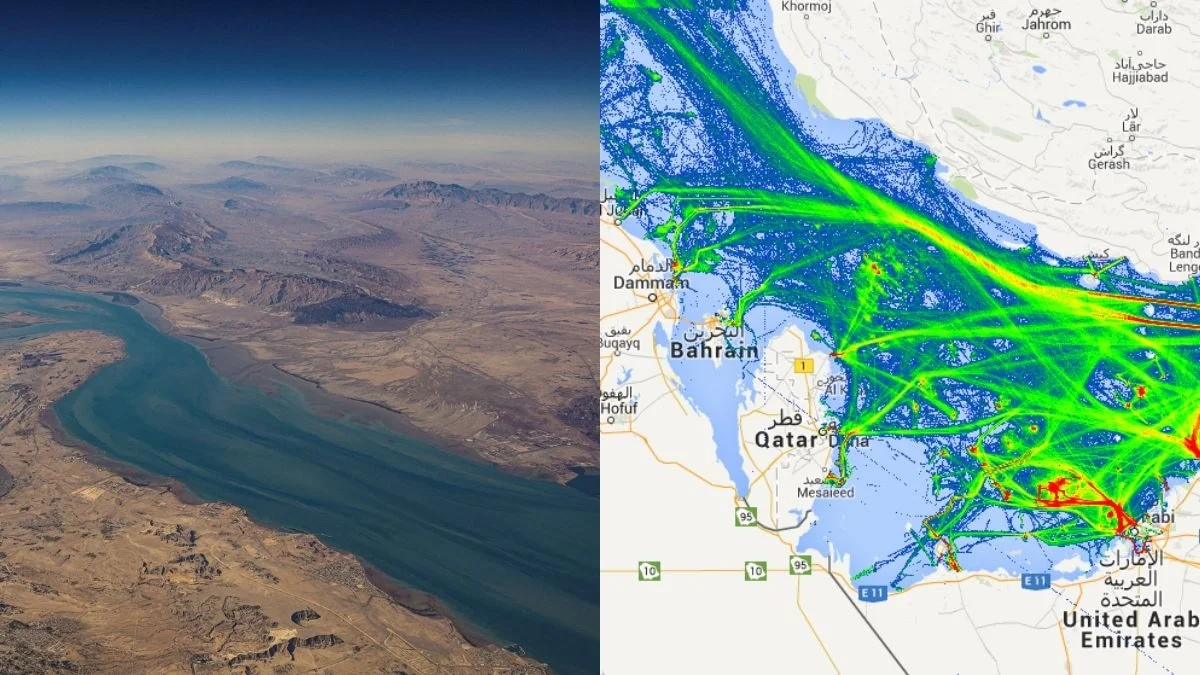 Roughly one-fifth of the world’s oil supply transits through the Strait of Hormuz. It is not simply a reg
ional waterway—it is a global pressure valve.
Iran does not need to close the Strait to create disruption. Even credible threats of interference raise insurance costs, spike futures contracts, and create market volatility.
Oil markets react to risk faster than governments respond to crises.
Energy price spikes cascade through the global economy:
• Transportation costs increase
• Manufacturing margins shrink
• Consumer prices rise
• Inflation pressures intensify
In an already fragile post-inflation environment, energy volatility becomes destabilizing.
The red flag is systemic sensitivity.
The global economy remains deeply dependent on a narrow maritime corridor adjacent to a high-tension conflict zone.
Cyber Warfare: The Invisible Escalation
Modern conflicts increasingly unfold in cyberspace.
Financial institutions have reported sophisticated intrusion attempts. Infrastructure operators have heightened alert levels. Energy grid operators have reinforced defensive protocols.
Cyber confrontation offers plausible deniability. It enables retaliation without immediate physical destruction.
But cyber deterrence is unstable.
Attribution remains complex. False flags are possible. Retaliatory thresholds are unclear.
A coordinated cyberattack targeting financial clearing systems, ports, or pipelines could create economic shockwaves within hours.
Unlike missile launches, cyber strikes lack visible trajectory. Their ambiguity increases miscalculation risk.
The battlefield is no longer defined by geography—it is defined by networks.
Proxy Networks: The Indirect Strategy
Instead, proxy engagement remains the most likely escalation channel.
Iraq.
Syria.
Lebanon.
Yemen.
These theaters allow pressure without declaration.
Limited strikes send signals. Retaliation remains deniable. Diplomatic flexibility remains intact.
However, proxy networks are decentralized. Command structures vary. Local actors may pursue their own agendas.
The red flag here is loss of control.
When decentralized actors escalate beyond intended limits, central governments face pressure to respond.
History shows proxy conflicts can spiral.
Domestic Political Pressures: External Conflict as Internal Signal
Foreign policy decisions rarely exist in isolation from domestic dynamics.
In the United States:
• Political polarization shapes foreign policy discourse
• Energy prices influence voter sentiment
• Military credibility narratives affect executive decisions
In Iran:
• Economic strain from sanctions intensifies public pressure
• Political legitimacy is tied to resistance posture
• Regional influence reinforces ideological identity
Domestic vulnerability often amplifies external signaling.
Strong rhetoric reassures domestic audiences—but raises international stakes.
The red flag is performative escalation.
When leaders must appear strong internally, flexibility externally diminishes.
Energy Transition: A Structural Variable
An often-overlooked dimension of this confrontation is the global energy transition.
As renewable energy expands, oil-exporting states face strategic recalibration. Long-term leverage shifts. But the transition is gradual.
During this transitional phase, fossil fuel chokepoints remain powerful tools.
This creates a paradox:
Long-term influence declines.
Short-term leverage intensifies.
Transitional periods are historically volatile.
Information Warfare: Escalation in Real Time
Social media platforms amplify narratives instantly. Disinformation spreads rapidly. Emotional reactions accelerate.
In prior decades, diplomatic crises unfolded over days or weeks. Today, market reactions occur within minutes of viral posts.
Information warfare shapes perception before facts are confirmed.
The red flag is psychological acceleration.
Escalation psychology can outpace diplomatic correction.
Three Strategic Scenarios
1. Controlled Volatility
Proxy engagements continue. Energy markets fluctuate but stabilize. Cyber operations remain below destructive thresholds.
Tension persists—but war is avoided.
2. Multi-Theater Proxy Expansion
Coordinated militia activity escalates across multiple regions. Limited direct strikes occur. Retaliation cycles intensify.
Geographic spread increases—but full-scale war remains avoided.
3. Direct Naval or Missile Clash
A miscalculated engagement triggers rapid escalation. International intervention pressures de-escalation after significant damage.
Low probability. High consequence.
In strategic analysis, high-consequence low-probability events demand serious attention.
Military Capability Balance
The United States maintains advanced air and naval superiority. Carrier strike groups, missile defense systems, and extensive regional bases provide projection capability.
Iran relies on asymmetric warfare strategies:
• Ballistic missile stockpiles
• Drone swarms
• Fast-attack naval craft
• Proxy networks
Asymmetry complicates deterrence. The weaker conventional actor invests in unconventional tools.The red flag is unpredictability.
Economic Ripple Effects
Energy volatility affects:
• Global inflation rates
• Central bank policy
• Currency stability
• Emerging market debt
A sustained 15–20% oil spike could alter monetary policy decisions worldwide.
Investors monitor not only battlefield events—but commodity price signals.
Geopolitics becomes macroeconomics.
Lessons from History
World War I began with mobilization misunderstandings and alliance entanglements. The Cuban Missile Crisis nearly escalated due to communication breakdowns.
Each crisis was shaped by misperception and pride.
The Iran–America confrontation contains similar structural risks:
• Alliance complexity
• Military proximity
• Domestic political pressure
• Limited trust
History rarely repeats—but structural dynamics rhyme.
Strategic Red Flags to Monitor
• Oil futures spikes beyond market fundamentals
• Sudden multi-theater proxy coordination
• Confirmed infrastructure cyber disruptions
• Diplomatic channel breakdown announcements
• Naval engagement incidents
When these indicators align, escalation probability increases sharply.
Constructive De-escalation Pathways
Stability is not automatic. It requires active maintenance.
Possible stabilizing mechanisms include:
-
Formal naval deconfliction agreements
-
Cyber non-aggression frameworks
-
Neutral third-party mediation
-
Energy diversification acceleration
-
Transparent red-line communication
Deterrence without dialogue becomes brittle.
Dialogue without deterrence becomes weak.
Balance defines stability.
Why This Matters Globally
This conflict influences:
• Fuel prices
• Supply chains
• Insurance costs
• Investment markets
• Inflation expectations
Even distant economies feel its effects.
Interconnectedness amplifies impact.
Psychological Drivers of Escalation
Conflict psychology revolves around pride, credibility, and perception.
Leaders must demonstrate resolve. Retreat appears costly. Escalation appears decisive.
Strategic restraint, however, often prevents catastrophe.
The rarest strength in geopolitics is controlled patience.
The Cyber Wildcard
A large-scale infrastructure cyberattack remains the most destabilizing wildcard.
Unlike conventional strikes, cyber attacks blur thresholds. Retaliation may be disproportionate due to uncertainty.
A single misattributed incident could accelerate confrontation.
Cyber deterrence frameworks remain underdeveloped.
Investor Awareness Signals
Markets often move before official confirmation.
Indicators include:
• Unusual shipping rerouting
• Oil tanker insurance premium spikes
• Defense stock surges
• Currency volatility in Gulf states
Strategic awareness allows proactive positioning rather than reactive panic.
The Global Order Test
This confrontation tests:
• International institutions
• Alliance cohesion
• Energy resilience
• Cyber governance
The post-Cold War order faces cumulative stress. Iran–America tension adds another layer.
Whether the system absorbs shock or fractures remains uncertain.
Final Strategic Assessment
Full-scale war remains unlikely—but not impossible.
The greater risk lies in cumulative escalation without structural release.
Energy dependency.
Cyber vulnerability.
Alliance fragility.
Domestic polarization.
These forces build quietly.
Conflicts ignite when accumulated friction meets trigger events.
The objective must be prevention.
Prevention requires:
• Clear communication
• Strategic humility
• Institutional resilience
Escalation is easy.
Restraint is difficult.
Conclusion: The Choice Between Pressure and Prudence
The Iran–America confrontation in 2026 is not simply about missiles or sanctions.
It is about systems under strain.
When systems face sustained pressure, they either adapt—or fracture.
Global stability now depends less on military superiority and more on disciplined restraint.
Understanding the structural red flags transforms uncertainty into awareness.
Awareness reduces panic.
Preparation reduces vulnerability.
Dialogue reduces escalation probability.
The world stands at a strategic inflection point.
Leaders can manage accumulated friction through communication and calibrated deterrence.
Or miscalculation can accelerate confrontation beyond intended limits.
History will not judge speeches.
It will judge decisions made under pressure.
And in moments like this, the greatest strategic power is not dominance.
It is restraint.
Commentaires
Laisser un commentaire