
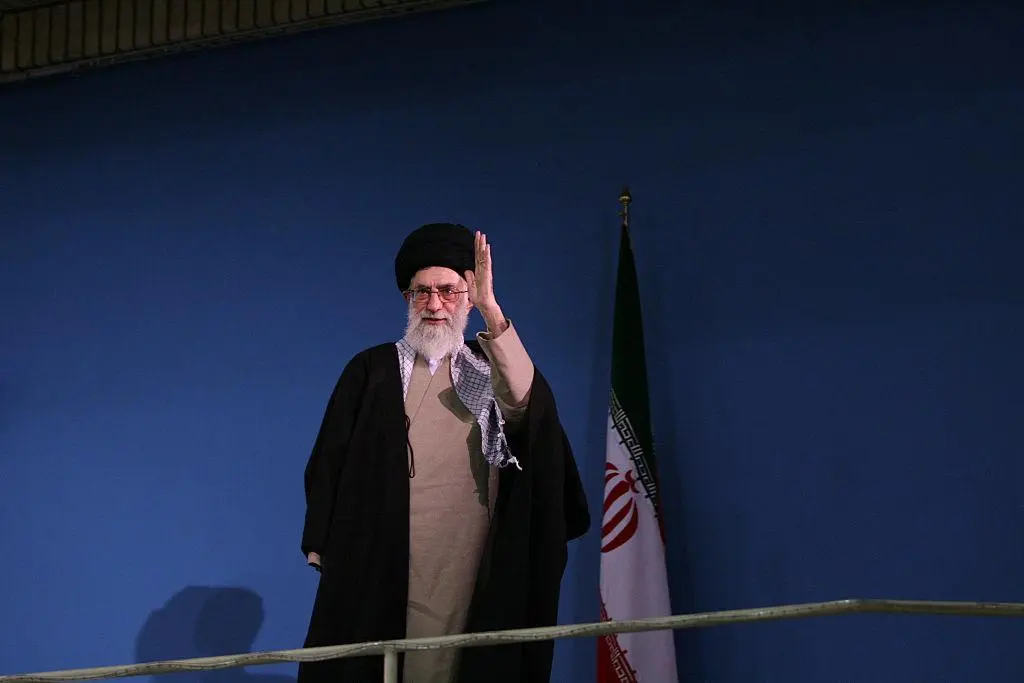
The Khamenei Shock: The Red Flags Behind Iran’s Most Dangerous Power Transition
For more than three decades, one man stood at the center of Iran’s political system.
Ayatollah Ali Khamenei was not simply a religious authority. He was the strategic architect of Iran’s modern geopolitical posture, the ultimate decision-maker over its military, intelligence services, and foreign policy.
His influence stretched far beyond Tehran.
Across the Middle East, his decisions shaped conflicts in Syria, Lebanon, Iraq, and Yemen. His policies influenced energy markets, nuclear negotiations, and the fragile balance between regional powers.
For years, analysts quietly asked the same question.
What happens after Khamenei?
Now that question is no longer theoretical.
In 2026, the sudden geopolitical shock surrounding Iran’s leadership has triggered one of the most volatile moments in Middle Eastern politics in decades.
But beneath the headlines lies a deeper strategic reality.
Major geopolitical events rarely appear without warning.
They emerge from years of accumulated pressure.
And the signals surrounding Iran today suggest something larger may be unfolding.
The Architecture of Power in Iran
To understand the magnitude of the current moment, it is necessary to understand how power in Iran actually works.
Unlike many modern political systems, Iran’s structure is built around a single central authority: the Supreme Leader.
While Iran has a president and parliament, the Supreme Leader holds ultimate control over the military, intelligence services, judiciary, and key political institutions.
In practice, this means the Supreme Leader functions as the final authority in nearly every strategic decision.
Since 1989, that role belonged to Ali Khamenei.
Over decades, he built an intricate network of political influence designed to preserve the ideological foundations of the Islamic Republic.
Central to that system is the Islamic Revolutionary Guard Corps (IRGC), a powerful military organization that operates both domestically and internationally.
The IRGC controls vast economic assets, oversees Iran’s missile programs, and manages relationships with regional proxy groups.
This network has allowed Iran to project influence far beyond its borders.
But systems built around powerful individuals often face a dangerous vulnerability.
Succession.
The Strategic Risk of Leadership Dependency
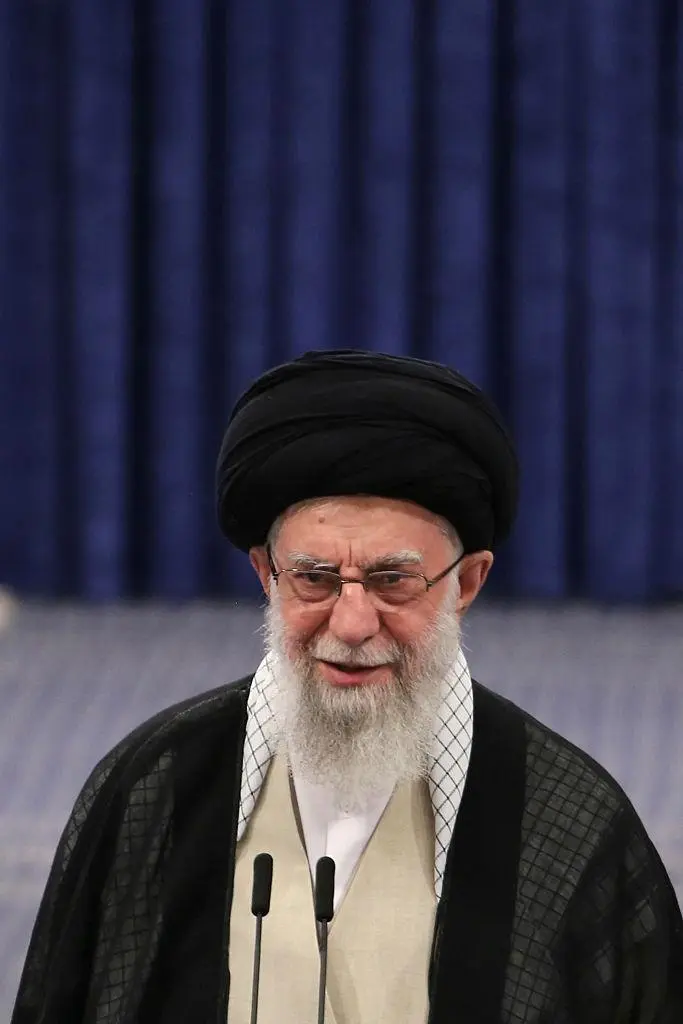
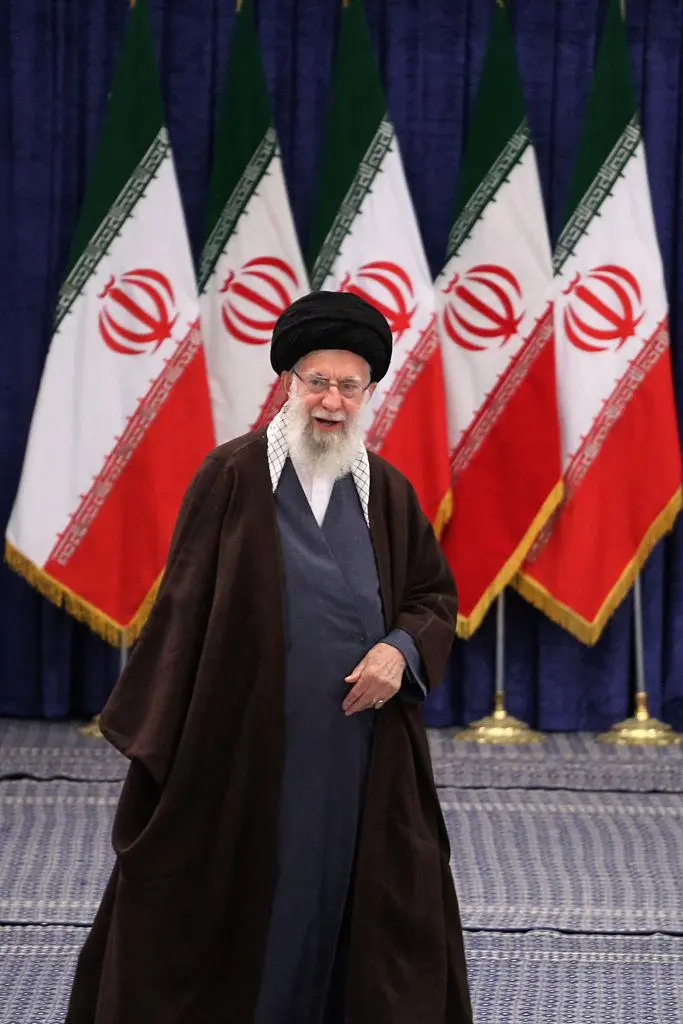
Political systems dominated by a single leader often appear stable on the surface.
But stability can mask fragility.
When decision-making authority becomes concentrated in one individual, the transition to new leadership becomes a moment of uncertainty.
Iran has faced this situation before.
After the death of Ayatollah Ruhollah Khomeini in 1989, the country experienced a critical transition that elevated Khamenei to power.
However, today’s circumstances are far more complicated.
Iran faces multiple simultaneous pressures:
• international sanctions
• economic stagnation
• regional military tensions
• internal political divisions
In such an environment, leadership transitions become extremely sensitive.
Even small shifts in power can produce ripple effects across the entire political system.
The Red Flag: Rising Geopolitical Pressure
Long before the current crisis, analysts were already observing signs of growing pressure around Iran.
Several factors contributed to this environment.
First, the collapse of nuclear negotiations deepened mistrust between Iran and Western governments.
Second, regional conflicts intensified.
Iran’s support for allied groups in Syria, Lebanon, Iraq, and Yemen placed it at the center of multiple geopolitical confrontations.
Third, economic sanctions created persistent financial pressure inside the country.
Inflation, currency volatility, and rising living costs created domestic frustrations that periodically erupted into protests.
These pressures formed a complex environment in which strategic decisions carried enormous consequences.
In geopolitical systems, pressure rarely disappears.
It accumulates.
Eventually, it finds release.
The Regional Chessboard
Iran’s influence across the Middle East has often been described as a strategic network rather than a traditional alliance system.
Through decades of political, military, and financial support, Tehran cultivated relationships with groups and governments that shared overlapping interests.
These include:
• Hezbollah in Lebanon
• political factions in Iraq
• armed groups in Syria
• the Houthi movement in Yemen
This network allowed Iran to shape regional dynamics without direct military confrontation with larger powers.
It also created a powerful deterrence strategy.
Any direct attack on Iran could trigger responses across multiple regional fronts.
However, this strategy also carries risks.
Networks are difficult to control completely.
When tensions escalate, decentralized actors can act independently, increasing unpredictability.
The Energy Factor
Beyond military considerations, Iran occupies a strategically critical position in global energy markets.
The Persian Gulf region contains some of the world’s largest oil and gas reserves.
More importantly, the Strait of Hormuz functions as one of the most important energy chokepoints on the planet.
Approximately one fifth of global oil supply passes through this narrow maritime corridor.
Any instability in this region immediately affects global energy markets.
Even rumors of disruption can trigger price volatility.
Energy traders understand a simple truth.
Geopolitical instability and oil prices move together.
When tensions rise near Hormuz, markets react instantly.
The Global Power Equation
The current moment must also be understood within the broader context of shifting global power dynamics.
The world is no longer defined by a single dominant geopolitical order.
Instead, multiple centers of power now influence international affairs.
The United States remains a major global force.
China continues expanding its economic influence.
Russia seeks to assert strategic leverage in multiple regions.
Middle Eastern powers themselves—including Saudi Arabia, Turkey, and Israel—play increasingly assertive roles.
In such a fragmented environment, regional crises can quickly attract global attention.
Every major power evaluates the situation through its own strategic lens.
The Succession Question
Inside Iran, the process of selecting a Supreme Leader falls to the Assembly of Experts, a body of clerics responsible for choosing the country’s highest authority.
However, formal procedures do not always determine political outcomes.
Informal power networks often play an equally important role.
Several potential successors have been discussed by analysts.
One name frequently mentioned is Mojtaba Khamenei, the son of the late Supreme Leader.
For years, Mojtaba has been described as an influential figure within Iran’s inner political circles.
However, dynastic succession in a revolutionary system is controversial.
Some factions support continuity.
Others may prefer alternative leadership.
This internal balancing act creates uncertainty.
And uncertainty is rarely confined within national borders.
The Global Economic Dimension
Geopolitical shocks rarely remain purely political.
They quickly become economic events.
Financial markets respond to uncertainty by adjusting risk assessments.
Energy prices fluctuate.
Currencies react.
Investors reassess exposure to regional instability.
Even distant economies can feel the consequences.
Energy costs influence transportation, manufacturing, and inflation.
Supply chains can be disrupted.
Insurance costs for shipping and trade increase.
In a globalized economy, regional crises often produce global economic reactions.
Strategic Intelligence: Reading the Signals
The most important question may not be what has happened.
It is what the situation reveals.
The current moment highlights several structural realities.
First, leadership transitions in centralized systems carry inherent risk.
Second, regional alliances are more fragile than they appear.
Third, global energy systems remain deeply vulnerable to geopolitical shocks.
Fourth, modern conflicts increasingly involve networks rather than conventional armies.
Understanding these signals allows observers to look beyond immediate headlines.
Three Possible Strategic Paths
Looking forward, analysts generally describe three broad scenarios.
Scenario One: Controlled Tension
Regional actors avoid full-scale war while maintaining strategic pressure through limited confrontations.
Scenario Two: Expanding Proxy Conflict
Multiple regional groups become involved, creating a complex multi-front confrontation.
Scenario Three: Diplomatic Reset
New leadership dynamics open space for negotiations and reduced tensions.
Each path remains possible.
And the direction may change rapidly depending on decisions made in the coming months.
The Red Flag Moment
For RedFlagInsiders, the most important takeaway is not the immediate event itself.
It is the structural vulnerability revealed by the event.
Systems that rely heavily on centralized leadership often face instability during transitions.
Regions built on complex alliances often experience ripple effects when power shifts occur.
Energy systems dependent on narrow geographic chokepoints remain vulnerable to geopolitical shocks.
These realities are not new.
But moments like this expose them clearly.
Conclusion: A Strategic Turning Point
History often identifies turning points only after they occur.
In the moment, events appear chaotic and unpredictable.
But with distance, patterns emerge.
The current situation surrounding Iran may represent such a moment.
It marks the end of one era in Iranian leadership.
But it may also mark the beginning of a new phase in regional and global politics.
The coming months will reveal whether this moment becomes a temporary crisis—or the start of a larger transformation.
What is already clear, however, is this.
The signals are there.
And ignoring signals has rarely ended well in geopolitics.
Commentaires
Laisser un commentaire