
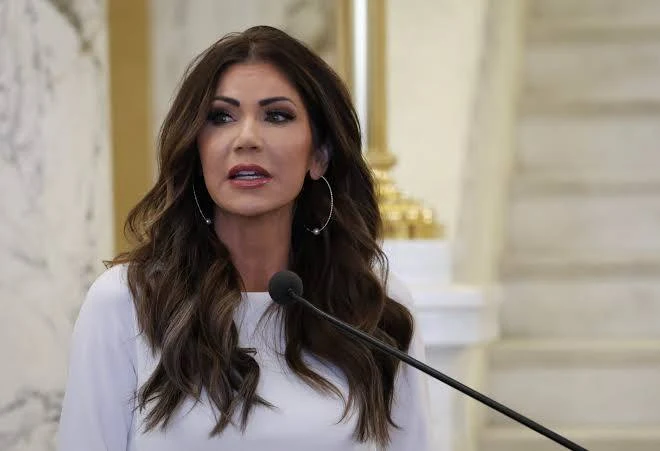
Kristi Noem: Power, Controversy, and the Political Signals Shaping America’s Next Leadership Era
In modern politics, visibility is power. But visibility also invites scrutiny. Few American politicians illustrate this dual reality more clearly than Kristi Noem, the governor of South Dakota whose political rise has turned her into one of the most recognizable conservative figures in the United States.
Over the past several years, Noem has evolved from a relatively unknown Midwestern politician into a nationally discussed political personality. Her approach to governance, communication strategy, and ideological positioning has drawn praise from supporters who see her as a defender of personal freedom and traditional values. At the same time, critics have questioned whether the political brand she has built reflects deeper tensions between leadership, media strategy, and policy responsibility.
Understanding the significance of Kristi Noem’s rise requires looking beyond headlines. It requires examining the political environment that produced her, the strategic narratives she has cultivated, and the broader signals her career sends about the future direction of American politics.
This is not simply a story about one governor. It is a story about modern political branding, ideological battles, and the evolving nature of leadership in a highly polarized democracy.
The Origins of a Political Career
Kristi Noem was born in 1971 in Watertown, South Dakota, and grew up on a family ranch and farm in the rural Midwest. Her upbringing has remained a central part of her political identity. In speeches, interviews, and campaign messaging, she frequently references her background in agriculture and rural life as a defining influence on her worldview.
After her father died in a farming accident in 1994, Noem returned home from college to help manage the family ranch. This period became a foundational element of her political narrative—one centered on resilience, personal responsibility, and the values of rural America.
Her entry into politics came in 2006 when she was elected to the South Dakota House of Representatives. During her time in the state legislature, she focused on issues related to taxation, agriculture, and economic development. Although she was not yet a national figure, her political messaging already reflected a consistent theme: limited government and strong local autonomy.
In 2010, Noem made a significant leap by running for South Dakota’s at-large seat in the U.S. House of Representatives. She won the election and began serving in Congress in 2011. During her tenure in Washington, she aligned herself with conservative fiscal policies and frequently emphasized the need to reduce federal regulation.
Her time in Congress also allowed her to build relationships within national Republican networks. These connections would later play an important role in expanding her political influence beyond the borders of South Dakota.
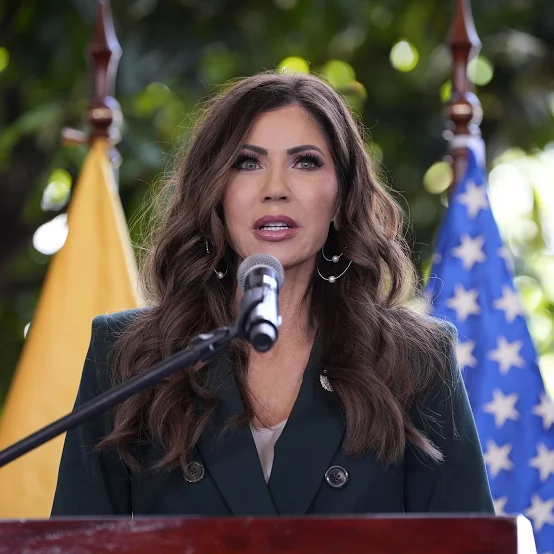
Becoming Governor: A Turning Point
In 2018, Kristi Noem ran for governor of South Dakota and won the election, becoming the first female governor in the state’s history. At the time, her victory was seen primarily as a regional political development rather than a national event.
That perception changed dramatically in 2020.
The COVID-19 pandemic transformed governance across the United States. Governors suddenly found themselves making decisions that affected public health, economic activity, and personal freedoms on an unprecedented scale.
While many states implemented strict lockdowns, mask mandates, and business closures, Noem took a markedly different approach. She resisted statewide mandates and emphasized voluntary personal responsibility instead.
Her argument was simple: individuals, families, and businesses should decide how to manage risk rather than having the state impose sweeping restrictions.
This approach made South Dakota one of the most visible case studies in the national debate over pandemic policy.
Supporters praised her stance as a defense of freedom and economic stability. Critics argued that the policy underestimated the public health risks associated with the virus.
Regardless of perspective, the political outcome was undeniable: Kristi Noem became a nationally recognized political figure almost overnight.
The Power of Political Branding
Modern politics operates within an ecosystem shaped by media narratives, digital platforms, and ideological communities. Political success increasingly depends on the ability to build a recognizable identity that resonates with a specific audience.
Kristi Noem’s political rise reflects a deliberate effort to construct such a brand.
Her messaging consistently emphasizes several themes:
Freedom and personal choice
Limited government intervention
Support for law enforcement
Defense of rural American values
Criticism of federal regulatory power
These themes align closely with broader currents within contemporary conservative politics. By positioning herself as a vocal advocate for these ideas, Noem expanded her influence far beyond the traditional boundaries of state-level governance.
Her frequent appearances on national television networks and political conferences further amplified her visibility. Social media platforms also played a major role in shaping her public persona, allowing her to communicate directly with supporters without relying entirely on traditional news coverage.
In the digital age, political narratives spread quickly. The more distinctive the narrative, the more attention it tends to attract.
For Kristi Noem, the narrative became clear: she was presented as a governor willing to challenge federal authority and defend individual liberty.
Controversies and Public Scrutiny
High-profile political leadership inevitably attracts controversy. As Kristi Noem’s national visibility increased, so did scrutiny of her decisions and personal conduct.
Several incidents contributed to debates about her leadership style and political strategy.
One area of controversy involved the management of pandemic policies. Critics pointed to South Dakota’s COVID-19 case numbers during certain periods of the pandemic as evidence that a lack of mandates carried public health risks. Supporters countered that the state’s economy remained open and that individuals should retain the right to make personal health decisions.
Another issue that generated attention involved ethics concerns raised by political opponents and watchdog groups. Questions were raised about potential conflicts of interest related to government decisions and family connections. While such concerns are not unusual in politics, they fueled broader debates about transparency and accountability in state government.
More recently, a personal story shared by Noem in her memoir drew widespread media coverage. In the book, she described an incident from years earlier involving a family dog that she ultimately decided to euthanize due to behavioral issues. The anecdote sparked strong reactions online, with some readers criticizing the decision while others viewed it as a reflection of rural life realities.
The intense public response highlighted a key truth of modern politics: personal stories can become political flashpoints when amplified through social media.
The National Political Dimension
Although Kristi Noem governs a state with a relatively small population, her influence within national political discussions has grown significantly.
Her name has occasionally appeared in conversations about potential vice-presidential candidates or future presidential contenders within the Republican Party. While such speculation does not guarantee future candidacy, it illustrates how her political brand has expanded beyond South Dakota.
Several factors contribute to this national attention.
First, Noem represents a style of leadership that resonates strongly with segments of the conservative electorate. Her emphasis on personal freedom and skepticism toward federal mandates reflects broader ideological currents within the Republican Party.
Second, her communication strategy aligns well with modern media dynamics. Politicians who generate strong reactions—both positive and negative—tend to receive greater coverage.
Third, her profile fits a strategic narrative within American politics: the emergence of younger leaders who could shape the future direction of their party.
However, national political visibility also introduces new challenges. The higher a politician rises within public discourse, the greater the expectations placed upon them.
Policy decisions that might once have been considered regional matters suddenly become national talking points.
Political Leadership in the Age of Polarization
To fully understand the debates surrounding Kristi Noem, one must consider the broader context of American political polarization.
Over the past two decades, ideological divisions in the United States have intensified. Political debates increasingly revolve around cultural identity, values, and perceptions of government authority.
Within this environment, leaders who take clear and assertive positions often gain strong support from their political base. At the same time, those positions can provoke equally strong opposition from critics.
Kristi Noem’s leadership style reflects this dynamic.
Supporters describe her as decisive and principled. Critics sometimes describe her approach as politically performative or overly focused on national visibility.
Both interpretations highlight the central tension facing modern political leaders: balancing governance responsibilities with the demands of national political narratives.
Lessons from the Noem Phenomenon
The rise of Kristi Noem reveals several broader insights about contemporary politics.
First, political influence is no longer confined to large states or major cities. Through media exposure and digital platforms, leaders from smaller states can quickly become national figures.
Second, narrative matters as much as policy. Political messaging that resonates emotionally with voters often shapes public perception more strongly than detailed legislative achievements.
Third, visibility amplifies risk. The more prominent a political figure becomes, the more their decisions, personal stories, and communications are analyzed and debated.
Finally, leadership in the digital era requires navigating a constant feedback loop between media coverage, public opinion, and policy decisions.
For politicians like Kristi Noem, success depends not only on governance outcomes but also on how effectively they manage this complex communication environment.
The Future of Kristi Noem’s Political Career
Predicting the future of any political career is difficult. Political landscapes shift rapidly, and public opinion can change in unexpected ways.
However, several possible paths appear plausible for Kristi Noem.
One possibility is continued leadership within South Dakota, focusing on state policy and economic development. Governors often use their positions to build long-term reputations for effective administration.
Another possibility involves deeper involvement in national politics. If her political brand continues to resonate with conservative voters, she could play a role in future presidential campaigns or party leadership initiatives.
A third scenario involves the broader transformation of American political leadership itself. Figures like Noem represent a generation of politicians whose careers are shaped by media visibility and ideological alignment as much as by traditional legislative achievements.
Whichever path unfolds, her career will likely remain a point of interest for political observers studying the evolution of leadership in the United States.
Conclusion: A Political Story Still Being Written
Kristi Noem’s rise illustrates the complex interplay between leadership, media strategy, and ideological identity in modern politics.
To supporters, she represents a bold defender of individual liberty and traditional American values. To critics, she embodies the risks of political branding overshadowing policy substance.
Both perspectives reveal something important about the current political moment.
In an era defined by intense media attention and rapid information cycles, political figures are no longer judged solely by the laws they pass or the policies they implement. They are also judged by the narratives they create and the symbols they represent.
Kristi Noem’s story remains unfinished. As political landscapes evolve and new challenges emerge, the true measure of her leadership will be determined not only by visibility but by the long-term impact of the decisions she makes.
For observers of American politics, the lesson is clear: behind every political headline lies a deeper story about power, strategy, and the future direction of democracy itself.
Commentaires
Laisser un commentaire