
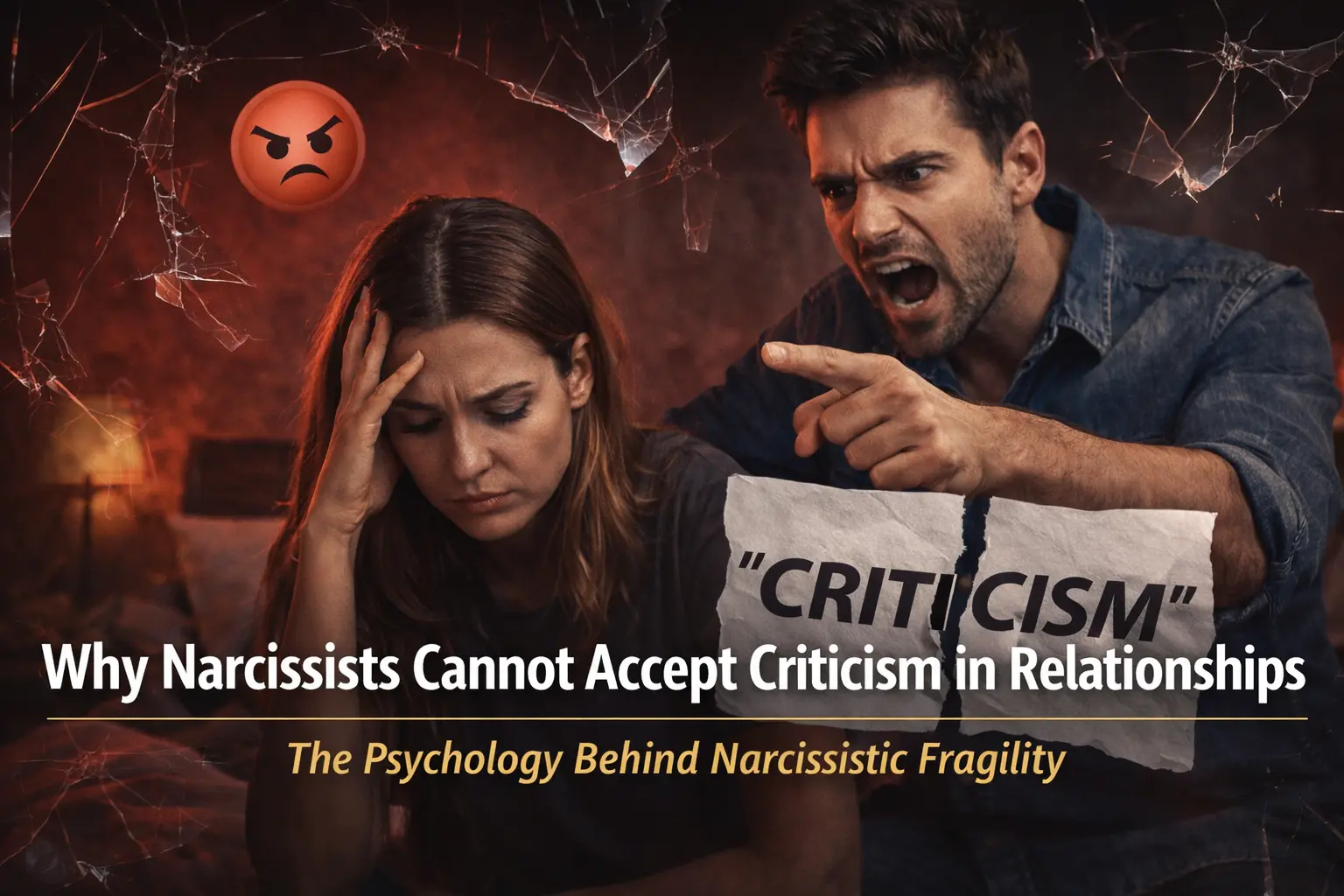
In healthy relationships, criticism can serve as a constructive tool for growth. When partners communicate openly and respectfully, feedback allows both individuals to understand each other better and improve the relationship over time. Constructive criticism helps partners recognize mistakes, adjust behaviors, and strengthen emotional trust. However, when one partner has strong narcissistic traits, criticism often triggers a completely different reaction. Many people who have been in relationships with narcissists notice that even mild feedback can provoke intense emotional responses. What begins as a simple conversation about feelings or concerns can quickly escalate into defensiveness, anger, or emotional withdrawal. Instead of listening calmly or reflecting on the feedback, narcissists may react by shifting blame, dismissing their partner’s concerns, or accusing their partner of being overly sensitive. This reaction often leaves the partner confused. Why does something as normal as feedback cause such a strong emotional response? The answer lies in the psychological structure of narcissistic personalities. Understanding why narcissists cannot easily accept criticism requires exploring the emotional vulnerabilities hidden behind narcissistic confidence.
The Fragile Ego Behind Narcissistic Confidence
Narcissists tend to be highly confident on the surface. They can portray themselves as accomplished, intellectually advanced, or emotionally robust individuals who hardly ever display insecurity. Nevertheless, several psychologists suggest that narcissistic confidence is often founded on delicate emotional bases. Instead of developing stable self-esteem through self awareness and emotional development, narcissists often seek external validation to sustain their self image. Their perception of being superior or exceptional is reinforced by compliments, admiration, and praise.. Criticism can be a threat to their self-esteem, which is heavily dependent on external validation. The narcissist may perceive feedback as an attack on their identity when someone challenges or questions their behavior. Why is this so? Instead, they may consider criticism as a form of self-destructive behavior or humiliation.
In what ways does criticism resemble an individual attack?
For individuals with emotional health, criticism and identity are typically separate. A person may state, "That conduct afflicted me," without acknowledging that the other individual is inherently flawed. Narcissists frequently find it difficult to differentiate between them. Criticism can be interpreted as an indication of their lack of competence. This perception of superiority or flawlessness causes intense emotional pain in narcissists, who often have an internal belief. The defense of their self-esteem is a common response among narcissists. They have the option to ignore the criticism, criticize the person giving feedback, or shift blame. What options are available? Their fragile ego is safeguarded by psychological mechanisms through these reactions.
Common Defensive Reactions to Criticism
When narcissists face criticism, several defensive reactions commonly appear. One of the most common reactions is blame shifting. Instead of acknowledging the criticism, narcissists may accuse their partner of causing the problem. For example, if a partner expresses hurt feelings about something the narcissist said, the narcissist may respond by claiming the partner misunderstood the situation. Another reaction is gaslighting. Gaslighting involves denying or distorting reality in order to make the other person doubt their perception.
A narcissist might say:
You’re imagining things.
That never happened.
You’re overreacting.
These responses redirect the conversation away from the original issue. Instead of addressing the criticism, the narcissist attempts to undermine the partner’s confidence in their own perception.
The Role of Narcissistic Shame
Behind many narcissistic reactions to criticism lies a powerful emotion: shame. Although narcissists often appear confident, criticism can trigger deep feelings of inadequacy. These feelings are often hidden beneath layers of defensive behavior. When criticism activates this underlying shame, the narcissist may react aggressively in order to protect themselves from emotional vulnerability. This reaction is sometimes called narcissistic rage. Narcissistic rage occurs when narcissists respond to criticism with anger, hostility, or emotional outbursts. The purpose of this reaction is not simply anger. Instead, it serves as a psychological defense against feelings of humiliation or weakness.
Why Narcissists Avoid Self-Reflection
Another reason narcissists struggle with criticism is their difficulty with self-reflection. Self-reflection requires emotional honesty and the ability to examine one’s own behavior objectively. For narcissists, this process can feel threatening. If they acknowledge mistakes, they must also acknowledge that they are imperfect. Because their self-image depends on appearing superior or flawless, narcissists may avoid situations that require honest self-evaluation. Instead of reflecting on their behavior, they may reinterpret situations in ways that protect their ego.
How This Pattern Affects Relationships
Over time, the inability to accept criticism can create serious problems in relationships. Healthy relationships require both partners to communicate openly about their needs and concerns. If one partner consistently rejects feedback, it becomes difficult to resolve conflicts. The partner may begin feeling that their feelings are ignored or dismissed. Eventually, this dynamic can create emotional distance within the relationship. The partner may stop expressing concerns altogether, fearing negative reactions. This silence can lead to unresolved issues and growing resentment.
Why Narcissists Often Surround Themselves With Admirers
Because criticism triggers emotional discomfort, narcissists often prefer environments where they receive admiration rather than honest feedback. They may surround themselves with people who praise them or avoid challenging their behavior. In relationships, this can create unrealistic expectations. The narcissist may expect constant admiration from their partner while rejecting any feedback that challenges their behavior. Over time, this imbalance can make relationships feel emotionally one-sided.
The Long-Term Consequences
Because narcissists struggle to accept criticism, their relationships often follow unstable patterns. Partners may feel that communication becomes impossible. When feedback leads to conflict rather than understanding, emotional trust gradually disappears. This dynamic is one of the reasons many narcissistic relationships eventually become toxic or unstable
Why Narcissists React With Anger When Criticized
One of the most noticeable reactions narcissists have toward criticism is anger. Even small comments that appear neutral or constructive can trigger surprisingly strong emotional responses. For example, a partner might say something simple like, “I felt hurt when you said that yesterday.” In a healthy relationship, this statement would open the door for discussion and understanding. However, when dealing with a narcissistic personality, the same comment may provoke defensiveness or anger. This happens because criticism activates the narcissist’s fragile self-image. The narcissist may feel that their authority or superiority is being challenged. Instead of reflecting on the feedback, they may respond aggressively in order to restore emotional control. This reaction is often referred to as narcissistic rage. Narcissistic rage does not always appear as loud shouting or dramatic anger. Sometimes it appears as cold hostility, passive-aggressive comments, or silent treatment. The goal of this reaction is to protect the narcissist from feeling vulnerable.
How Narcissists Turn Criticism Into Conflict
Another pattern that appears frequently in narcissistic relationships is the transformation of feedback into conflict. When partners attempt to communicate concerns, narcissists may redirect the conversation in ways that create arguments. For example, if a partner mentions a specific behavior that hurt them, the narcissist may respond with statements such as:
“You’re always criticizing me.”
“You’re trying to make me look like the bad person.”
“You never appreciate anything I do.”
These responses shift the focus of the conversation. Instead of discussing the original issue, the discussion becomes about whether the partner’s criticism was unfair. Over time, this dynamic discourages open communication.The partner may stop expressing concerns altogether because they expect the conversation to escalate into conflict.
The Emotional Impact on Partners
Being in a relationship with someone who cannot accept criticism can be emotionally exhausting. Partners may feel as though they must carefully monitor every word they say in order to avoid triggering defensive reactions. This constant pressure can lead to emotional anxiety. Many individuals in narcissistic relationships describe feeling as though they are “walking on eggshells.” They may avoid discussing important issues because they fear negative reactions.
Over time, this communication barrier can weaken the emotional connection between partners. Without honest communication, relationships cannot grow or resolve conflicts in healthy ways.
The Role of Gaslighting During Criticism
Gaslighting often appears when narcissists are confronted with criticism. Instead of addressing the concern directly, the narcissist may attempt to distort the situation. For example, they may deny statements they previously made or suggest that their partner misunderstood the conversation.
Statements such as:
“That never happened.”
“You’re imagining things.”
“You’re too sensitive.”
These responses create confusion. The partner may begin questioning their own memory or emotional reactions. Gaslighting allows the narcissist to avoid responsibility while shifting doubt onto the partner.
Why Narcissists Rarely Apologize
Another common characteristic of narcissistic personalities is difficulty apologizing. Apologizing requires acknowledging mistakes and taking responsibility for actions. For narcissists, this can feel threatening. Admitting fault may challenge the image they maintain of themselves as competent or superior. Instead of offering genuine apologies, narcissists may give indirect responses such as:
“I’m sorry you feel that way.”
“You misunderstood what I meant.”
These statements appear to acknowledge the issue but do not actually accept responsibility. This pattern can leave partners feeling that their concerns are never fully addressed.
How Narcissistic Communication Patterns Damage Relationships
Over time, narcissistic communication patterns can seriously damage relationships. Healthy relationships rely on open dialogue where both partners feel heard and respected. When one partner consistently rejects feedback, the relationship loses the ability to grow and adapt. Problems remain unresolved, and emotional frustration builds. Partners may begin to feel emotionally disconnected from the narcissist. Without mutual understanding, the relationship becomes increasingly unstable.
Learning to Recognize Narcissistic Behavior
Recognizing narcissistic reactions to criticism is an important step in protecting emotional well-being.
Some common signs include:
• extreme defensiveness during discussions
• refusal to accept responsibility
• gaslighting or denial of events
• blame shifting
• emotional outbursts or silent treatment
When these patterns appear consistently, they may indicate deeper narcissistic tendencies. Understanding these behaviors helps individuals recognize unhealthy relationship dynamics.
Setting Boundaries When Dealing With Narcissists
One of the most effective ways to protect emotional well-being in narcissistic relationships is establishing boundaries. Boundaries help individuals maintain emotional independence and prevent manipulation. For example, partners can communicate clearly about respectful communication and expectations during disagreements. However, narcissists may resist boundaries because boundaries reduce their ability to control conversations. Despite this resistance, maintaining boundaries is essential for emotional protection. Many people only recognize narcissistic behavior after realizing they were dating a narcissist.
These manipulation patterns often appear early in relationships and are considered serious relationship red flags that many people ignore.
https://www.redflaginsiders.com/why-narcissists-always-need-attention-in-relationships
At the beginning of toxic relationships, narcissists often create strong emotional attachment through intense affection known as love bombing.
Some people fail to recognize early warning signs because they overlook the hidden psychological red flags in dating.
https://www.redflaginsiders.com/10-signs-you-are-dating-a-narcissist?utm_source=chatgpt.com
Another common behavior in narcissistic relationships is when narcissists constantly shift blame during conflicts.
Narcissists struggle to accept criticism because it threatens their fragile self-image and triggers feelings of shame or vulnerability. Instead of viewing feedback as an opportunity for growth, they often interpret criticism as a personal attack. This perception leads to defensive reactions such as anger, gaslighting, blame shifting, and emotional withdrawal. Over time, these patterns make healthy communication extremely difficult within relationships. Partners may feel unheard, emotionally exhausted, or discouraged from expressing their concerns. Understanding narcissistic reactions to criticism can help individuals recognize unhealthy relationship patterns earlier. Healthy relationships require empathy, communication, and the willingness to acknowledge mistakes. When both partners share responsibility for emotional growth, relationships become stronger and more supportive. Recognizing narcissistic behavior is an important step toward building healthier and more balanced relationships
Commentaires
Laisser un commentaire