
Romantic relationships are supposed to provide emotional safety, support, and understanding. When two people commit to building a relationship together, they usually expect mutual respect and shared responsibility when challenges appear. Healthy relationships involve communication, accountability, and the ability to acknowledge mistakes.
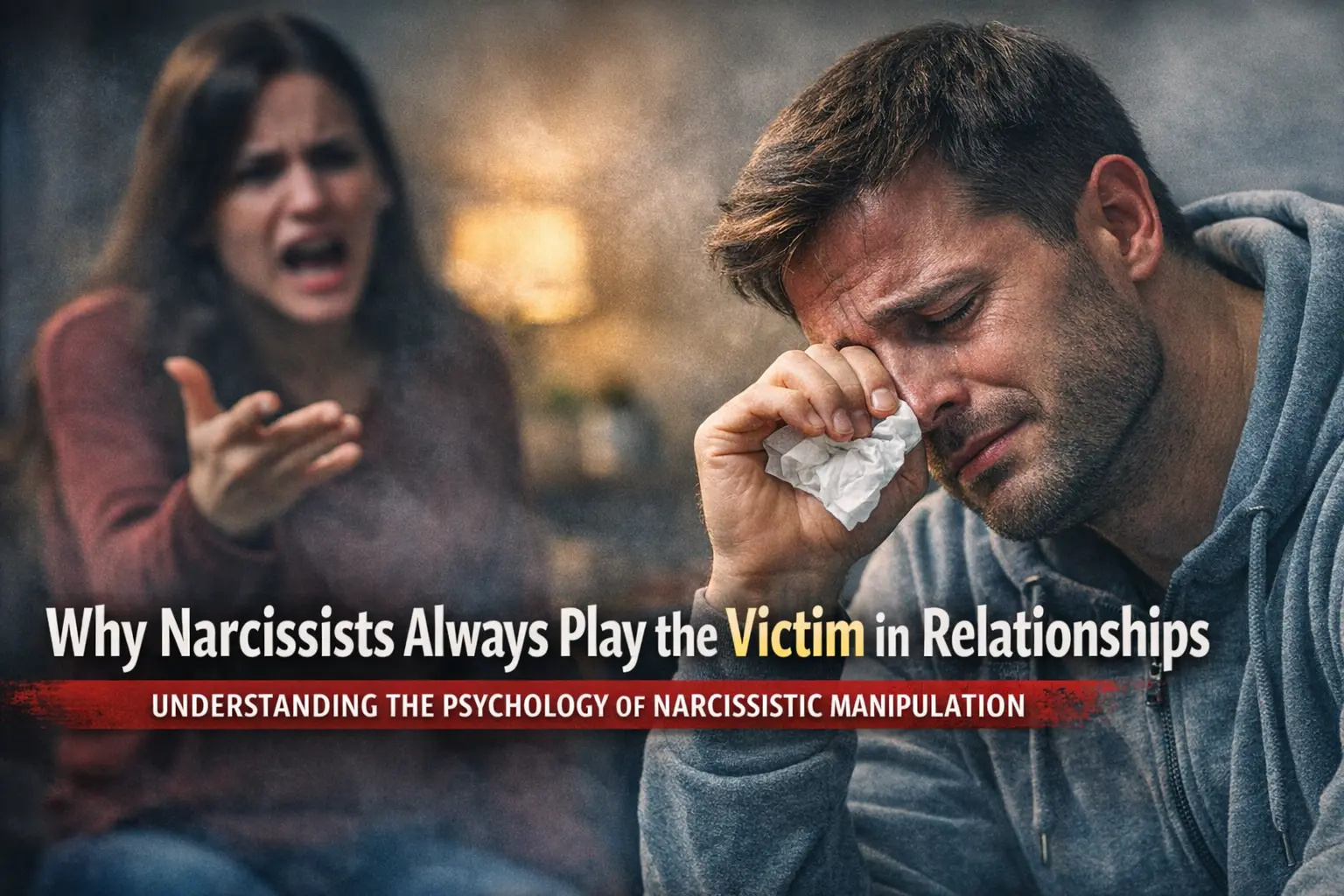
However, when one partner has narcissistic traits, the dynamic of the relationship can become very different. One of the most confusing behaviors people experience when dating a narcissist is the constant victim mentality. No matter what happens, the narcissistic partner somehow manages to portray themselves as the person who has been wronged.
Arguments, misunderstandings, and emotional conflicts frequently end with the narcissist claiming that they are the victim. Even when their actions caused the problem, they may redirect the conversation in a way that makes their partner feel responsible.
This pattern can slowly create emotional confusion. Partners may begin questioning their own reactions and feelings. They may start wondering whether they are truly responsible for the problems in the relationship.
Understanding why narcissists frequently present themselves as victims requires exploring narcissistic psychology, emotional defense mechanisms, and the dynamics of control that often exist within narcissistic relationships.
Understanding Narcissistic Personality Traits
To understand the victim mentality in narcissists, it is important to understand the core characteristics of narcissistic personalities.
Narcissistic individuals often display an exaggerated sense of self-importance. They tend to believe they are more intelligent, more talented, or more deserving of admiration than others. They may seek recognition and validation constantly.
At first, this confidence can appear attractive. Narcissists often seem charismatic and socially skilled. They may make strong first impressions and attract attention easily.
However, beneath this confident exterior often lies a fragile sense of self-worth. Narcissists depend heavily on admiration from others to maintain their emotional stability. When they receive praise, they feel validated and powerful.
But when they face criticism or rejection, their emotional reaction can be extremely defensive.
Because of this emotional vulnerability, narcissists develop psychological strategies that help protect their ego. One of these strategies is portraying themselves as victims.
Why Narcissists Fear Accountability
Accountability requires emotional maturity. In healthy relationships, individuals are able to admit when they make mistakes and take responsibility for their behavior.
For narcissists, however, accountability can feel threatening.
Accepting responsibility would mean admitting imperfection. It would challenge the image they have created of themselves as superior or faultless.
To avoid this uncomfortable experience, narcissists often use psychological defense mechanisms. Instead of acknowledging mistakes, they may shift blame onto others or reinterpret events in ways that protect their ego.
Playing the victim becomes a convenient solution.
If they can convince others that they were treated unfairly, they avoid responsibility entirely.
The Emotional Power of the Victim Role
The victim role is a powerful psychological tool.
When someone appears to be suffering or misunderstood, people naturally feel sympathy. Friends, family members, and partners may offer emotional support and reassurance.
Narcissists often take advantage of this natural human response.
By portraying themselves as victims, they gain attention, validation, and emotional control.
At the same time, the victim narrative shifts responsibility away from them. If they are the victim, then someone else must be responsible for the conflict.
In romantic relationships, this responsibility often falls on the partner.
Blame Shifting in Narcissistic Relationships
Blame shifting is one of the most common behaviors seen in narcissistic relationships.
When disagreements occur, narcissists often redirect the focus of the conversation. Instead of addressing the issue directly, they may criticize their partner’s reaction.
For example, if a partner expresses hurt feelings about something the narcissist said, the narcissist may respond with statements such as:
“You’re overreacting.”
“You’re too sensitive.”
“You’re always trying to start problems.”
These responses change the direction of the discussion. Instead of focusing on the narcissist’s behavior, the conversation becomes about the partner’s emotional reaction.
Over time, the partner may begin to feel responsible for conflicts.
Gaslighting and Psychological Confusion
Gaslighting is another manipulation tactic commonly used by narcissists.
Gaslighting involves manipulating someone into doubting their perception of reality. Narcissists may deny past events, reinterpret conversations, or suggest that their partner misunderstood situations.
For example, if a partner remembers a hurtful comment, the narcissist may deny making the statement. They may claim that the partner imagined it or misunderstood the context.
Statements like these are common:
“You’re imagining things.”
“That never happened.”
“You’re remembering it wrong.”
When this pattern occurs repeatedly, it creates confusion and emotional instability.
The partner may begin questioning their own memory and judgment.
Why Narcissists Crave Sympathy
Another reason narcissists adopt the victim role is their desire for sympathy.
Sympathy provides emotional validation. When people express concern for the narcissist’s struggles, it reinforces their sense of importance.
Narcissists often share stories where they appear misunderstood or unfairly treated. These stories may involve conflicts with coworkers, family members, or former partners.
While some of these experiences may be genuine, narcissists often reinterpret situations in ways that support their victim narrative.
They may omit their own role in the conflict or exaggerate the actions of others.
The Emotional Impact on Partners
Having someone who plays the victim in your relationship can be emotionally draining.
In some cases, partners may feel obliged to maintain emotional equilibrium in the relationship.
Some people may start avoiding or skimming topics or behaviors due to the fear of offending the narcissist.
Eventually, this emotional pressure can cause you anxiety and self doubt.?...
Couples may be unsure of the current state of their relationship.
Their expectations may be viewed as unreasonable, or they could be seen to have unrealistic standards. Why?
Emotional confusion is a contributing factor to the longevity of narcissistic relationships.
Why Many People Stay in Narcissistic Relationships
Despite the emotional difficulties, many individuals remain in relationships with narcissists for extended periods.
One reason is the early stage of the relationship. Narcissists often begin relationships with intense charm and attention. This phase can make the relationship feel exciting and deeply meaningful.
When the relationship later becomes difficult, the partner may hope that the affectionate version of the narcissist will return.
Another reason is emotional investment. After spending months or years building the relationship, leaving can feel extremely difficult.
Fear of loneliness and uncertainty about the future can also prevent individuals from ending unhealthy relationships.
Recognizing the Pattern
Recognizing the victim mentality pattern is the first step toward protecting emotional well-being.
Healthy relationships involve shared responsibility for problems. Both partners should be willing to acknowledge mistakes and work toward solutions.
When one partner consistently refuses accountability and blames the other for every conflict, it may indicate deeper psychological dynamics.
Understanding this pattern helps individuals evaluate whether the relationship is truly supportive and healthy.
Setting Healthy Boundaries
Setting emotional boundaries is essential when dealing with narcissistic behavior.
Boundaries help protect self-respect and emotional stability.
For example, individuals can communicate clearly about what behavior they will not accept in the relationship.
They can also refuse to take responsibility for problems that were not caused by them.
While narcissists may resist boundaries, maintaining them is important for emotional protection.
Many psychologists consider narcissistic victim behavior one of the most dangerous relationship red flags people ignore in modern dating
https://www.redflaginsiders.com/10-relationship-red-flags-you-should-never-ignore
In many situations this behavior appears when someone is dating a narcissist without realizing the manipulation patterns.
https://www.redflaginsiders.com/10-signs-you-are-dating-a-narcissist
Narcissists often begin relationships with extreme affection known as love bombing.
In many cases narcissists avoid responsibility by constantly blaming their partners for relationship problems.
Narcissists often play the victim because it allows them to protect their ego, avoid accountability, and maintain emotional control within relationships.
By portraying themselves as misunderstood or unfairly treated, they shift attention away from their own behavior and place responsibility on their partners.
Over time, this dynamic can create confusion, emotional exhaustion, and self-doubt.
Understanding narcissistic victim behavior allows individuals to recognize manipulation earlier and make healthier decisions about their relationships.
Healthy partnerships are built on empathy, accountability, and mutual respect. When both partners take responsibility for their actions and communicate openly, relationships become far more stable and supportive.
Recognizing narcissistic manipulation is an important step toward building relationships that are emotionally balanced and genuinely supportive
Commentaires
Laisser un commentaire