
Romantic relationships are meant to provide emotional safety, trust, and mutual support. When two people enter a relationship, they usually expect understanding, respect, and shared responsibility when challenges arise. Healthy relationships depend on communication and accountability from both partners.
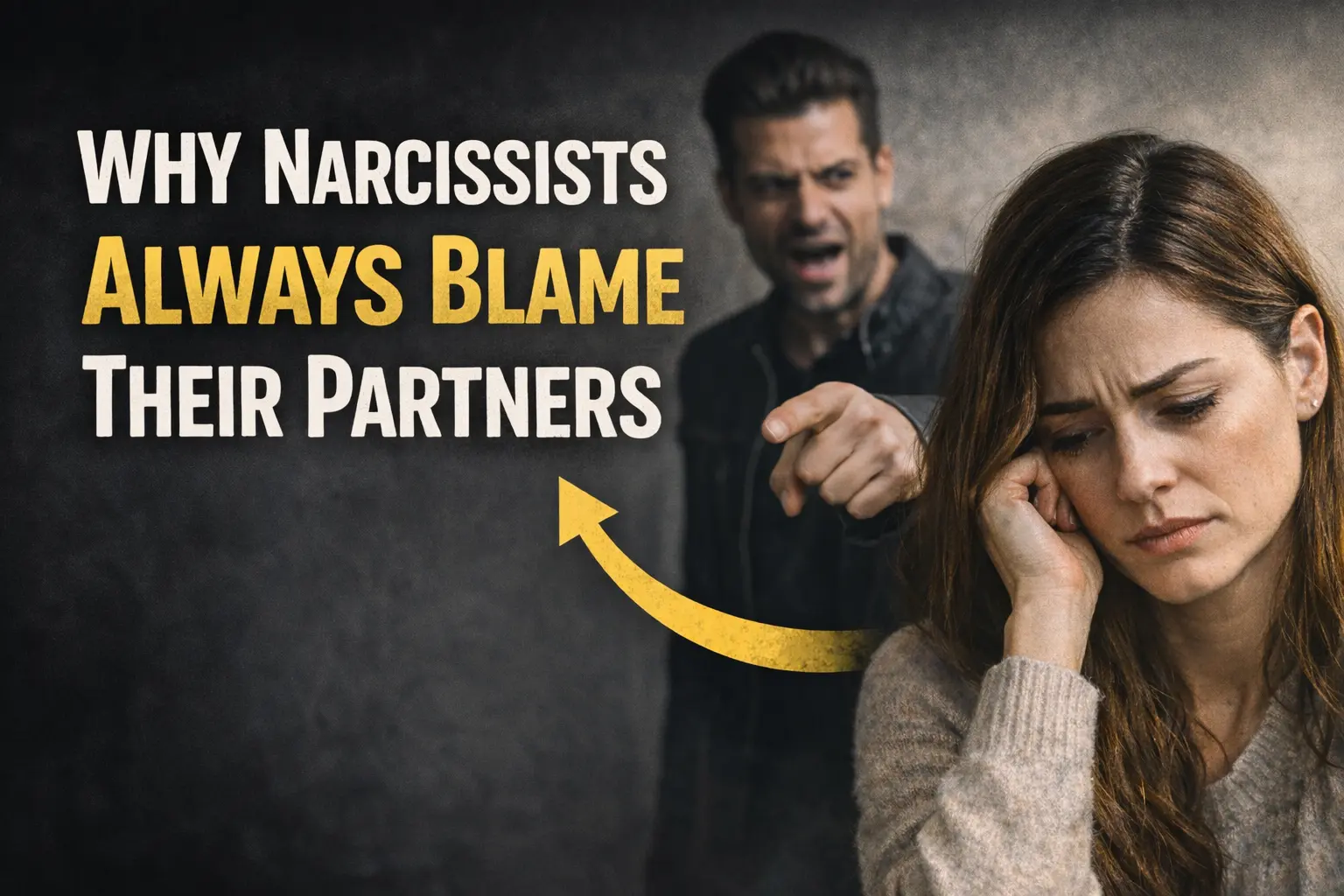
However, relationships involving narcissistic personalities often operate very differently. One of the most frustrating and emotionally damaging patterns people experience when dating a narcissist is the constant shifting of blame. No matter what happens in the relationship, the narcissistic partner somehow finds a way to make their partner responsible for the problem.
Arguments, misunderstandings, emotional conflicts, or even the narcissist’s own mistakes often become situations where the partner ends up feeling guilty. Over time, this pattern can create deep confusion and emotional exhaustion.
Many individuals who have experienced narcissistic relationships describe a similar feeling: they constantly tried to fix problems they did not actually cause. They felt responsible for emotional conflicts, even when their partner’s behavior was clearly harmful.
Understanding why narcissists behave this way requires looking deeper into narcissistic psychology and the emotional mechanisms that drive their behavior.
Understanding Narcissistic Personality Traits
Narcissism is often associated with confidence, charisma, and strong self-belief. Many narcissistic individuals initially appear attractive, successful, and socially skilled. They may seem confident and capable, which can make them appealing romantic partners.
However, beneath this outward confidence often lies a fragile sense of self-worth. Narcissistic personalities rely heavily on external validation to maintain their self-image. They often need admiration, praise, and recognition in order to feel secure.
Because their self-esteem is unstable, criticism or accountability can feel extremely threatening to them. When someone points out their mistakes, it challenges their carefully constructed image of superiority.
Rather than accepting responsibility, narcissists often protect their ego by redirecting blame onto others.
In romantic relationships, the closest person becomes the easiest target for this behavior.
The Role of Ego Protection
One of the primary reasons narcissists blame their partners is ego protection.
To maintain their self-image, narcissists must believe that they are right, capable, and superior. Accepting responsibility for mistakes contradicts this belief.
If a narcissist were to admit wrongdoing, it would require acknowledging vulnerability or imperfection. For individuals with narcissistic tendencies, this can feel deeply uncomfortable.
As a result, they develop psychological defense mechanisms that help them avoid responsibility. Blame shifting becomes one of the most common strategies.
Instead of saying, “I made a mistake,” the narcissist reframes the situation so that their partner appears responsible.
This allows them to preserve their self-image while avoiding emotional discomfort.
Blame Shifting as a Manipulation Strategy
Blame shifting is not always impulsive. In many narcissistic relationships, it becomes a consistent behavioral pattern.
When a conflict occurs, the narcissist may quickly redirect the conversation away from their own behavior. Instead of addressing the original issue, they may criticize their partner’s tone, reaction, or emotional response.
For example, if their partner expresses hurt feelings about something the narcissist said, the narcissist might respond with statements like:
“You’re too sensitive.”
“You always overreact.”
“You misunderstood what I meant.”
These responses change the focus of the conversation. Instead of discussing the narcissist’s behavior, the discussion becomes about whether the partner’s emotional reaction was justified.
Over time, this tactic can make the partner feel responsible for emotional conflicts that were actually caused by the narcissist.
Gaslighting and Psychological Confusion
Gaslighting often accompanies blame shifting in narcissistic relationships.
Gaslighting is a manipulation technique where someone attempts to make another person doubt their perception of reality. Narcissistic partners may deny events, reinterpret conversations, or suggest that their partner is misremembering situations.
For example, a narcissistic partner may deny making a hurtful statement even when their partner clearly remembers it. They may say:
“That never happened.”
“You’re imagining things.”
“You’re remembering it wrong.”
When this behavior occurs repeatedly, it can create serious psychological confusion.
The partner may begin questioning their own memory or emotional reactions. This uncertainty makes it easier for the narcissist to maintain control within the relationship.
Why Narcissists Rarely Apologize
Apologizing requires acknowledging responsibility and recognizing how one’s behavior affected another person.
For narcissists, this can feel extremely uncomfortable.
Admitting fault contradicts the self-image they work hard to maintain. Instead of offering sincere apologies, narcissists often use indirect statements that avoid accountability.
For example:
“I’m sorry you feel that way.”
This statement may appear like an apology, but it does not acknowledge wrongdoing. Instead, it shifts responsibility onto the partner’s emotional response.
Because narcissists avoid accountability, conflicts in the relationship rarely reach healthy resolution.
Emotional Control and Power Dynamics
Blame shifting also allows narcissists to maintain control within relationships.
When someone believes they are responsible for relationship problems, they often attempt to fix those problems by changing their behavior.
Narcissists may exploit this dynamic by repeatedly suggesting that their partner needs to behave differently in order for the relationship to improve.
Over time, the partner may become increasingly focused on avoiding criticism or conflict.
This creates an imbalance of power in the relationship. The narcissist becomes the person who defines what is acceptable behavior, while the partner constantly tries to meet expectations that may never be reasonable.
The Emotional Impact on Partners
Being constantly blamed for relationship problems can have serious psychological effects.
Partners in narcissistic relationships often experience:
• self-doubt
• anxiety
• emotional exhaustion
• reduced self-confidence
• confusion about their own perceptions
Because the narcissist repeatedly shifts responsibility, the partner may feel as though they are always doing something wrong.
This emotional environment can become extremely draining over time.
Why Many People Stay in Narcissistic Relationships
Despite the emotional challenges, many individuals remain in relationships with narcissistic partners for long periods.
One reason is the memory of the early stage of the relationship. Narcissists often begin relationships with intense charm and affection, a phase sometimes referred to as love bombing.
During this stage, the narcissist may appear incredibly attentive, supportive, and emotionally invested.
When the relationship later becomes difficult, the partner may hope that the affectionate version of the narcissist will return.
Another reason is emotional investment. After spending months or years building a relationship, leaving can feel extremely difficult.
Fear of loneliness can also make it hard for individuals to end unhealthy relationships.
Recognizing Narcissistic Relationship Patterns
One of the most important steps toward emotional well-being is recognizing the behavioral patterns present in narcissistic relationships.
Healthy relationships involve shared responsibility for conflicts and challenges. Both partners acknowledge mistakes and work toward solutions together.
When one partner consistently refuses accountability and blames the other for every issue, it may indicate deeper psychological dynamics.
Recognizing this pattern allows individuals to evaluate whether the relationship is truly healthy.
Setting Boundaries
Establishing clear emotional boundaries is essential when dealing with narcissistic behavior.
Boundaries help protect personal well-being and prevent manipulation.
For example, individuals can communicate clearly about what behavior they will and will not accept within the relationship.
However, it is important to understand that narcissistic individuals may resist boundaries. Because they often prefer control, they may react negatively when limits are introduced.
Despite this, maintaining boundaries is an important step toward emotional protection.
Seeking Support
Leaving or managing a narcissistic relationship can be emotionally challenging.
Support from trusted friends, family members, or mental health professionals can provide valuable perspective.
Talking to people outside the relationship often helps individuals recognize patterns that may have become normalized over time.
Professional counseling can also help rebuild self-confidence and develop strategies for dealing with narcissistic behavior.
Many experts consider narcissistic manipulation one of the most dangerous relationship red flags in modern dating
https://www.redflaginsiders.com/10-relationship-red-flags-you-should-never-ignore
Some narcissistic behaviors appear early as psychological red flags in dating that many people fail to notice.
https://www.redflaginsiders.com/psychological-red-flags-in-dating-most-people-ignore
Many narcissistic partners start relationships with intense affection known as love bombing.
These behaviors are common signs you might be dating a narcissist.
https://www.redflaginsiders.com/10-signs-you-are-dating-a-narcissist
Narcissistic relationships often involve patterns of blame shifting, gaslighting, and emotional manipulation. These behaviors allow narcissists to protect their fragile ego while maintaining control within the relationship.
Over time, the partner may experience confusion, emotional exhaustion, and declining self-confidence.
Understanding the psychological motivations behind narcissistic blame shifting can help individuals recognize these patterns earlier.
Healthy relationships require accountability, empathy, and mutual respect. When both partners take responsibility for their actions and support each other emotionally, relationships become far more stable and fulfilling.
Recognizing narcissistic behavior is the first step toward protecting emotional well-being and building healthier relationships in the future.
Commentaires
Laisser un commentaire