
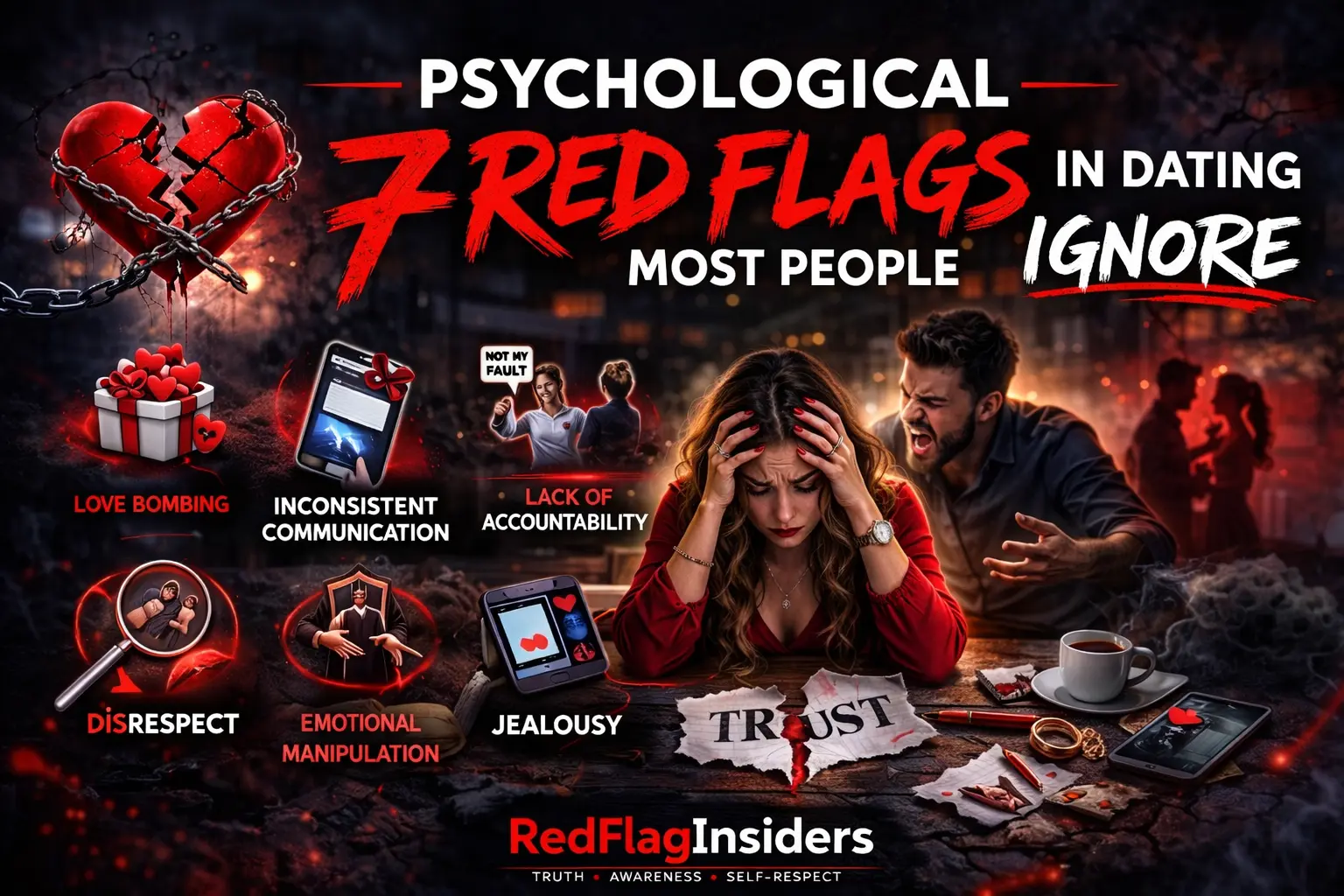
Why Early Dating Red Flags Matter
The early stages of dating often feel exciting, mysterious, and emotionally intense. During this phase, people are naturally focused on attraction, chemistry, and the possibility of building a meaningful connection. These emotions can create a powerful sense of optimism that makes it difficult to evaluate a partner objectively.
Many relationship experts explain that the early dating phase functions almost like a psychological filter. Individuals tend to emphasize compatibility while minimizing warning signs. Small behaviors that appear insignificant at first can later reveal deeper patterns of emotional immaturity, manipulation, or incompatibility.
Recognizing psychological red flags early does not mean expecting perfection from a partner. Every person has flaws, habits, and personal struggles. However, certain patterns of behavior often signal deeper issues that can lead to unhealthy relationship dynamics if ignored.
Understanding these early warning signs helps individuals make more informed decisions about emotional boundaries and long-term compatibility. By recognizing patterns before they become deeply rooted, people can avoid investing time and emotional energy into relationships that may eventually become harmful.
The Psychology of Early Attraction
Attraction is one of the strongest psychological forces in human relationships. When people feel attracted to someone, their brains release chemicals such as dopamine and oxytocin that create feelings of pleasure, excitement, and connection.
These biological responses are designed to encourage bonding. However, they can also reduce the ability to evaluate potential partners critically. When attraction is strong, individuals often reinterpret concerning behavior in a positive way.
For example, possessiveness may be perceived as passion, intense emotional reactions may be interpreted as deep love, and controlling tendencies may appear as protective behavior.
This psychological bias explains why many individuals only recognize red flags months or even years into a relationship. By that point, emotional investment may already be significant.
Understanding the influence of attraction helps people remain aware of behavioral patterns that might otherwise be ignored.
Red Flag #1: Emotional Intensity Too Early
One of the most overlooked psychological red flags is excessive emotional intensity at the beginning of a relationship.
When someone expresses extreme affection, deep emotional attachment, or long-term commitment within a very short time, it can feel flattering. However, healthy emotional bonds typically develop gradually.
Rapid emotional escalation may indicate a pattern sometimes referred to as love bombing. This behavior involves overwhelming someone with attention, compliments, and affection in order to create strong emotional dependency quickly.
While intense early attention can feel exciting, it may later shift into control, pressure, or emotional manipulation once the relationship becomes established.
Healthy relationships tend to develop at a steady pace rather than accelerating dramatically in the first few weeks.
Red Flag #2: Inconsistent Communication Patterns
Emotional maturity is evident in communication patterns.
The inability of a partner to communicate with the other without feeling affection can cause emotional confusion. This inconsistency may initially be unimportant but can lead to anxiety and uncertainty over time. Why?
Unpredictable communication often leads to the other partner constantly analyzing messages, reactions, and behavior.
Some cases indicate a lack of emotional maturity or difficulty in maintaining stable emotional connections. The intentional use of inconsistency can serve as a manipulative tactic to foster emotional attachment in certain cases.
Stable, polite and predictable communication is a common trait of healthy relationships. The third red flag is the absence of accountability for personal issues.
Another significant psychological indicator is when someone consistently tries to avoid responsibility for their behavior.
Emotionally mature individuals can recognize their mistakes and work towards resolving them, particularly when confronted with conflict or difficult conversations.
Nonetheless, there are those who always assign blame to others for any issues. They may present themselves as casualties in every conflict or reframe events to remove their own responsibility.
Suspicious behavior can eventually manifest as monitoring activities, such as phone checking or questioning social interactions, or requesting constant reassurance.
Over time, these actions can result in a situation where one partner feels constantly criticized or accused. Why?
Trust is essential for maintaining emotional safety in relationships. Why?
Red Flag #6: Emotional Manipulation.
The manipulation of emotions is often subtle and difficult to detect.
It is possible for the manipulative partner to use excessive emotional responses, guilt-based criticism, or a manipulation of decisions.
Examples include statements such as:
This would happen to me if you had a sincere interest in me.
You are the reason I have this feeling.
• “You are overreacting.”.
The statement removes blame from the manipulator and causes emotional distress on the other partner. Why does this happen?
Over time, manipulation can result in confusion, self-loathing, and emotional exhaustion....
It's the seventh red flag -- support networks are being disconnected.
A further warning is that if a partner seeks to isolate someone from their circle of friends or family, it could be harmful.
The process may initiate with indirect criticism of particular relationships. The motives of friends may be questioned by one spouse or unease when family members are involved. Why?
Why do many people fail to acknowledge the existence of dating red flags?
They often ignore uncomfortable patterns, even if they are visible.
Various psychological factors contribute to this behavior.'
The first step is to have emotional hope. It is common for people to anticipate that their partner will change or improve as the relationship becomes more stable.
Second, attraction can create strong emotional attachment that makes it difficult to step back and evaluate the situation objectively.
Third, social pressure sometimes encourages individuals to maintain relationships even when they feel uncertain.
Recognizing these psychological influences helps individuals make more balanced decisions about their relationships.
Developing Emotional Awareness in Dating
Emotional awareness is one of the most valuable skills in modern dating.
People who develop strong self-awareness are more likely to recognize patterns that feel uncomfortable or unhealthy. Trusting one’s intuition often provides early signals about relationship dynamics.
When interactions consistently create anxiety, confusion, or emotional exhaustion, these feelings often reflect deeper compatibility issues.
Healthy relationships tend to create feelings of emotional safety, stability, and mutual respect.
Building Healthier Relationship Foundations
Recognizing red flags does not mean avoiding relationships altogether. Instead, it encourages individuals to approach relationships with clarity and healthy boundaries.
Strong relationships typically include several key characteristics:
• Open communication
• Emotional accountability
• Respect for personal boundaries
• Mutual support
• Personal independence
When both partners demonstrate these qualities, relationships become more resilient and fulfilling.
Recognizing Warning Signs Before Emotional Investment Grows
Dating can be one of the most rewarding experiences in life when it leads to meaningful emotional connection. However, understanding psychological patterns is essential for avoiding relationships that may become unhealthy over time.
Red flags rarely appear suddenly. Instead, they emerge through repeated behaviors that reveal deeper attitudes toward respect, accountability, and emotional maturity.
By recognizing these patterns early, individuals can protect their emotional well-being and invest their time in relationships that have genuine potential for long-term stability and happiness.
Healthy relationships are built on trust, communication, and mutual respect — not emotional pressure, manipulation, or control
Commentaires
Laisser un commentaire