
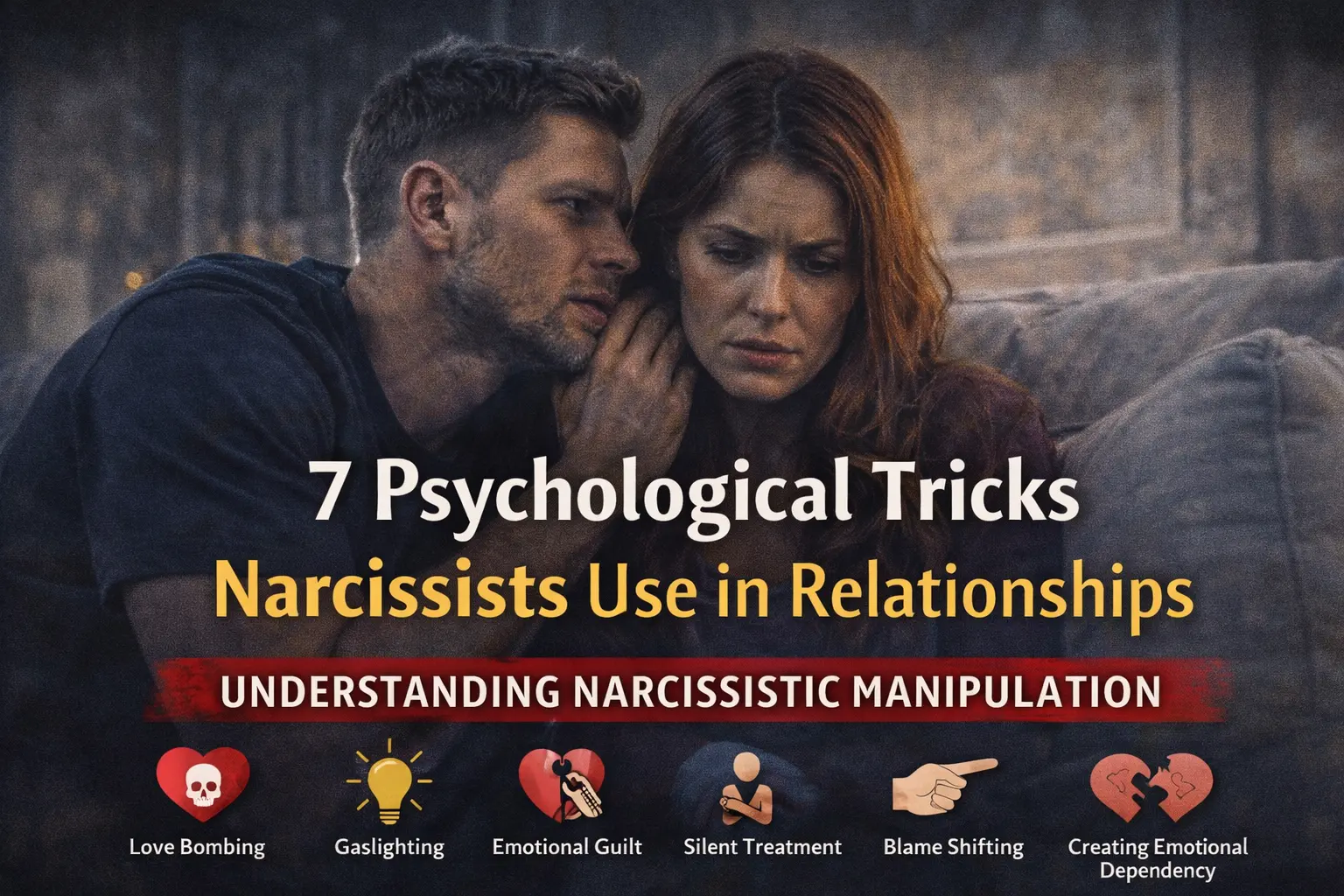
Romantic relationships should ideally provide emotional support, mutual respect, and trust. When two people build a relationship together, they usually expect honesty and open communication. Healthy relationships allow both partners to feel safe expressing their feelings and concerns. However, when one partner has narcissistic personality traits, the emotional dynamic of the relationship can become complicated. Narcissists often rely on subtle psychological strategies to maintain control and influence within their relationships. These strategies are rarely obvious in the beginning. In fact, narcissists may initially appear charming, attentive, and emotionally supportive. Their partners may feel lucky to be with someone who seems confident and caring. Over time, however, certain behavioral patterns begin to emerge. These patterns often involve emotional manipulation designed to create dependency, confusion, and control. Many people do not recognize these manipulation tactics until the relationship has already caused emotional damage. Understanding the psychological tricks narcissists use in relationships can help individuals identify unhealthy patterns earlier.
Trick 1: Love Bombing
One of the most common psychological tactics narcissists use at the beginning of relationships is love bombing.
Love bombing involves overwhelming a partner with affection, compliments, and attention. The narcissist may send frequent messages, give constant compliments, and express intense emotional interest very early in the relationship. At first, this behavior may feel exciting and flattering. Many people interpret love bombing as genuine affection. However, the purpose of love bombing is often to create strong emotional attachment quickly. Once the partner becomes emotionally invested, the narcissist may gradually change their behavior. The intense affection may decrease, leaving the partner confused and emotionally dependent.
Trick 2: Gaslighting
Gaslighting is one of the most powerful manipulation tactics used by narcissists. Gaslighting occurs when someone attempts to make another person doubt their perception of reality. Narcissists may deny events, reinterpret conversations, or claim their partner misunderstood what happened.
For example, if a partner remembers a hurtful comment, the narcissist may deny making the statement. They might say things like:
You’re imagining things.
That never happened.
You’re too sensitive.
Over time, gaslighting can cause the partner to question their own memory and judgment.
Trick 3: Emotional Guilt
It is common for narcissists to manipulate their partners through the use of guilt. Their partner may be accused of being solely responsible for their emotional well-being. The narcissist may express guilt in response to their partner's decision not to make the same decision.
For example:
“I never think about how I feel. I don’t think it matters to you The partner's emotional attachment to the narcissist is caused by these statements, which can be distressing.
Trick 4: Silent Treatment
The use of silent treatment is another psychological strategy frequently employed by narcissists.
Instead of discussing issues directly, narcissist tend to withdraw emotionally and turn away from communication. This behavior can last for hours or days. This nonverbal approach can cause significant anxiety in the partner. They may be desperate to repair the emotional bond and re-open communication. When a partner wants things to get back on track with their relationship, they may apologize or take responsibility for the situation even if it's not serious.
Trick 5: Blame Shifting
Narcissists rarely accept responsibility for their actions. Instead, they often shift blame onto their partner. When conflicts occur, the narcissist may accuse their partner of causing the problem. For example, if the narcissist behaves disrespectfully, they may claim their partner provoked the reaction. This tactic allows the narcissist to avoid accountability while making their partner feel responsible for the conflict.
Trick 6: Emotional Inconsistency
Narcissists often alternate between affection and emotional distance. One day they may appear loving and supportive. The next day they may become cold, critical, or distant. This unpredictable behavior creates confusion and emotional instability. Partners may spend significant time trying to understand what caused the change in mood. Over time, they may begin adjusting their behavior in order to keep the narcissist happy.
Trick 7: Creating Emotional Dependency
One of the ultimate goals of narcissistic manipulation is creating emotional dependency. By using tactics such as love bombing, guilt, gaslighting, and emotional inconsistency, narcissists gradually influence how their partner feels about themselves. The partner may begin relying on the narcissist for emotional validation and approval. When someone becomes emotionally dependent, it becomes much harder for them to leave the relationship
Why Narcissists Use These Psychological Tricks
Narcissists use psychological manipulation for several reasons. One of the main motivations is maintaining emotional control within relationships. For narcissistic individuals, relationships are often less about emotional connection and more about validation and influence. They want to feel admired, respected, and emotionally powerful. Manipulation tactics allow narcissists to control how their partners think, react, and behave. For example, when narcissists use guilt or gaslighting, they are not simply reacting emotionally. In many cases, these behaviors are strategies designed to shift responsibility and maintain control. When their partner begins doubting themselves or feeling responsible for emotional problems, the narcissist gains more influence within the relationship. Over time, this pattern can create an imbalance where the narcissist’s needs dominate the emotional environment of the relationship.
The Psychological Impact on the Partner
Narcissistic individuals can cause significant emotional damage to their partners in relationships. Why?
Among the most common effects is self doubt. The act of gaslighting or blame shifting repeatedly can lead someone to question their own perceptions and judgment.
If a narcissistic partner frequently refuses to acknowledge events or misinterprets conversations, they may become questionable about their ability to remember things. The other common consequence is emotional fatigue. It can be mentally draining to constantly try and control someone's emotions without pause. The partners can be vulnerable, choosing to speak silently and aggressively without causing any disruption. This emotional stress can lead to anxiety and loss of confidence, as well as emotional fatigue.
Why Manipulation Is Often Difficult to Recognize
One reason narcissistic manipulation can be difficult to recognize is that it rarely begins in an obvious way. In the early stages of a relationship, narcissists often appear charming, affectionate, and emotionally attentive. Their partners may feel deeply valued and appreciated. Because of this positive beginning, partners may interpret later manipulation as temporary conflict rather than a consistent pattern. Another reason manipulation is difficult to recognize is that many of these tactics are subtle. For example, gaslighting may occur gradually, with small statements that slowly undermine the partner’s confidence. Similarly, emotional guilt may appear as expressions of vulnerability rather than deliberate manipulation. Over time, however, these behaviors create emotional imbalance within the relationship.
Recognizing Manipulation Early
Recognizing manipulation early can help individuals protect themselves from emotionally unhealthy relationships. One warning sign is consistent emotional confusion. If a person frequently feels uncertain about what actually happened during arguments or conversations, gaslighting may be occurring. Another sign is constant blame. When one partner refuses to take responsibility for conflicts and repeatedly blames the other person, it may indicate manipulative behavior. Emotional inconsistency can also be a warning sign. If a partner frequently alternates between affection and criticism without clear explanation, it may create emotional instability. Healthy relationships should feel emotionally stable and supportive rather than confusing and unpredictable.
Strategies for Deficiting Narcissistic Manipulation.
Maintaining emotional awareness and establishing clear boundaries is crucial in maintaining good relationships. It's crucial to comprehend that manipulation tactics like guilt, gaslighting, and silent treatment are not effective means of promoting communication. Once individuals become conscious of these conduct, they can start imposing restrictions on their acceptable behavior within the partnership.
By establishing clear boundaries for respect and communication, manipulation can be prevented.
Maintaining close relationships with loved ones is also beneficial. Observing from outside sources can reveal important information about relationship dynamics that may be difficult to discern internally. E.g.
Consulting with a mental health professional can assist individuals in understanding and managing complex relationship scenarios.
Healthy Relationships vs Narcissistic Relationships
Healthy relationships are built on mutual respect, empathy, and emotional support. Both partners should feel comfortable expressing their thoughts and emotions without fear of criticism or manipulation. Conflicts are addressed through open communication rather than blame or emotional punishment. In narcissistic relationships, however, emotional balance is often disrupted. Manipulation tactics such as gaslighting, blame shifting, and emotional guilt create confusion and imbalance. Instead of feeling emotionally supported, the partner may feel responsible for managing the narcissist’s emotions. Recognizing the difference between healthy communication and manipulation is an important step toward building healthier relationships.
Many people only understand these manipulation tactics after realizing they were dating a narcissist.
https://www.redflaginsiders.com/10-signs-you-are-dating-a-narcissist
These behaviors often appear early in relationships and are considered serious relationship red flags that many people ignore.
At the beginning of the relationship, narcissists often create emotional attachment through intense affection known as love bombing.
Another common tactic narcissists use is shifting responsibility and constantly blaming their partners for relationship problems.
https://www.redflaginsiders.com/psychological-red-flags-in-dating-most-people-ignore
These manipulation patterns can also appear in subtle ways, especially when people notice the hidden psychological red flags in dating.
Narcissists often rely on subtle psychological tricks to influence and control their partners. Tactics such as love bombing, gaslighting, emotional guilt, silent treatment, and blame shifting can create confusion and emotional dependency within relationships. Because these behaviors often develop gradually, many people do not recognize the manipulation until significant emotional damage has occurred. Understanding these psychological tricks allows individuals to identify unhealthy patterns earlier and protect their emotional well-being. Healthy relationships should promote trust, empathy, and emotional stability. When both partners communicate openly and respect each other’s needs, relationships become far more fulfilling and supportive. Recognizing manipulation is the first step toward building relationships that are based on genuine respect and emotional balance
Commentaires
Laisser un commentaire