
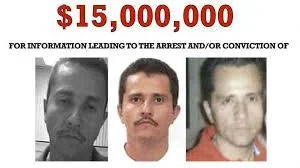
El Mencho: The Corporate Architecture of a Modern Cartel and the Global Red Flag Hiding in Plain Sight
Most crime stories are told through spectacle.
Gunfire. Arrest warrants. Bounties. Dramatic raids.
But spectacle hides structure.
And structure is where real power lives.
Behind the name “El Mencho” is not simply a fugitive cartel leader. Behind the headlines is something far more strategic: the evolution of a criminal organization that operates with corporate discipline, diversified revenue streams, territorial expansion models, and financial sophistication rivaling multinational enterprises.
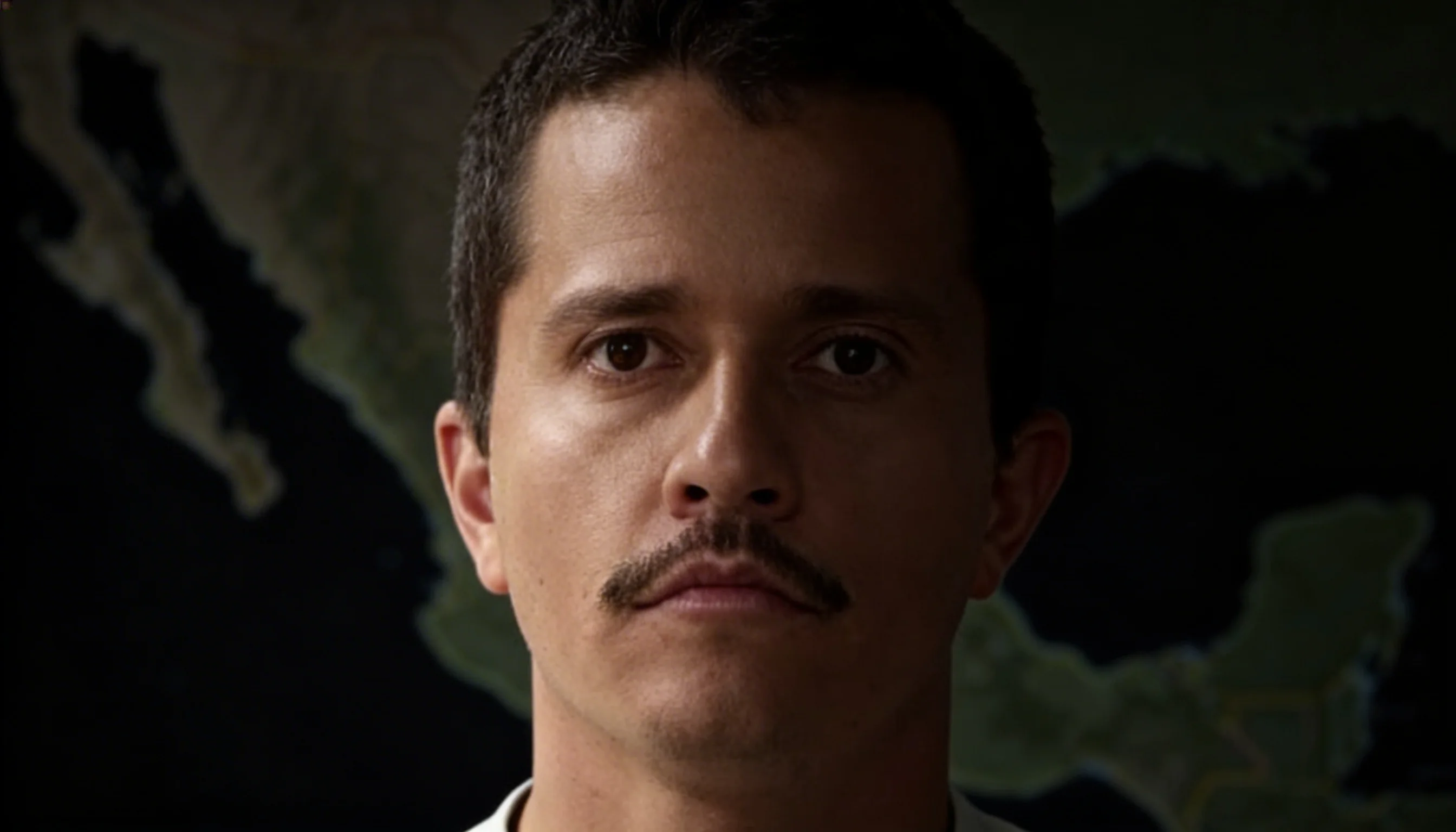
Nemesio Oseguera Cervantes — widely known as El Mencho — rose to lead the Jalisco New Generation Cartel (CJNG), one of the most powerful and rapidly expanding criminal organizations in recent history. But focusing solely on the individual misses the deeper red flag.
The real issue is systemic design.
How did a regional operator build an organization capable of scaling across territories, penetrating financial systems, and adapting faster than many state institutions?
This investigation is not about glorification. It is about risk intelligence. It is about understanding the architecture behind criminal expansion — and why ignoring structure is more dangerous than chasing headlines.
From Fragmentation to Opportunity: The Strategic Timing of Expansion
To understand El Mencho’s rise, we must examine timing.
In the early 2010s, Mexico’s criminal landscape was destabilized by the fragmentation of major cartels. Leadership arrests, internal betrayals, and territorial disputes created power vacuums across multiple states.
Where many groups descended into chaotic infighting, CJNG adopted a different posture: aggressive consolidation.
Rather than retreating into defensive survival, the organization pushed outward.
This is a key red flag.
In unstable environments, most actors become reactive. The few who become proactive often dominate.
CJNG’s expansion into strategic states — including Jalisco, Michoacán, Guanajuato, Veracruz, and Baja California — was not random. These territories represented logistical corridors, industrial hubs, and key trafficking routes.
The pattern resembled corporate market entry strategy:
-
Identify weak competitors.
-
Enter with overwhelming force.
-
Neutralize resistance rapidly.
-
Install loyal regional operators.
-
Control supply chains.
This was not improvisation.
It was systematized expansion.
The Militarization of Image: Psychological Operations as Strategy
One of the defining characteristics of CJNG’s growth was its use of militarized imagery.
Convoys of armored vehicles. Tactical gear. Coordinated formations. Publicly released videos designed to project strength and discipline.
This was not mere intimidation.
It was branding.
In fragmented criminal ecosystems, perception shapes alliances. If smaller groups believe resistance is futile, they defect or align rather than fight.
Psychological warfare reduces operational costs.
When fear precedes arrival, territory falls faster.
This tactic demonstrates a fundamental principle of power: reputation compounds influence.
The red flag here is not only violence — it is strategic communication. CJNG demonstrated an understanding of digital propaganda dynamics in an era where viral content amplifies narrative dominance.
Crime had entered the algorithmic age.
The Synthetic Drug Pivot: Business Model Innovation
Traditional drug cartels historically relied heavily on agricultural-based narcotics such as cocaine and marijuana. These supply chains depended on farming cycles, international sourcing, and weather variables.
CJNG capitalized on a structural shift: synthetic drugs.
Methamphetamine and fentanyl offer:
• High potency at low production cost
• Rapid manufacturing cycles
• Scalable output
• Smaller logistical footprints
• Enormous profit margins
This pivot represented operational modernization.
Synthetic production reduces dependency on crop cycles and foreign suppliers. It allows greater control over input materials and output volume.
In economic terms, it increases vertical integration.
The synthetic drug market also responds quickly to demand fluctuations, making it adaptable. Adaptability is survival in high-risk environments.
The opioid crisis in the United States cannot be attributed to a single actor. However, the expansion of synthetic drug networks dramatically increased supply intensity and volatility.
More supply.
Lower prices.
Higher lethality.
The red flag extends beyond criminal activity into public health infrastructure strain.
Organizational Design: Decentralization as Resilience
One of the most overlooked aspects of CJNG’s structure is decentralization.
Rather than a rigid top-down model, the organization reportedly operates through semi-autonomous regional cells. Local leaders maintain operational flexibility while remaining aligned with broader strategy.
This design creates resilience.
If one region collapses under law enforcement pressure, others continue functioning.
Centralized organizations often fall when leadership is captured. Decentralized networks fragment but survive.
This mirrors trends seen in modern corporations and even technology platforms: distributed operational authority increases survivability.
The red flag here is structural durability.
Removing a leader does not dismantle a network optimized for decentralization.
Revenue Diversification: The Criminal Portfolio Strategy
Drug trafficking is only one component of CJNG’s revenue ecosystem.
Reports and investigations have linked cartel activities to:
• Fuel theft
• Extortion networks
• Mining infiltration
• Agricultural coercion
• Real estate laundering
• Import-export shell companies
Diversification spreads risk.
If one revenue stream is disrupted, others compensate.
This resembles portfolio theory in finance — diversified income reduces volatility.
The more diversified the organization, the harder it becomes to destabilize through single-point interventions.
The lesson is sobering: criminal enterprises evolve just like legitimate businesses.
Financial Penetration: The Silent Expansion
Perhaps the most concerning dimension of cartel expansion is financial integration.
Cash-based crime is visible.
Digitally laundered capital is not.
Criminal proceeds often flow through:
• Real estate developments
• Construction firms
• Hospitality businesses
• Agricultural operations
• Small import-export companies
When illicit capital blends with legitimate sectors, detection becomes exponentially more difficult.
This creates market distortion.
Artificially injected liquidity inflates property markets, distorts competition, and undermines regulatory trust.
The red flag shifts from violence to systemic corrosion.
When criminal capital integrates quietly, the consequences compound over time.
Recruitment Dynamics: Economic Vulnerability as Entry Point
Large-scale criminal organizations require constant recruitment.
Where does that labor come from?
Economic vulnerability.
Regions with limited employment opportunities, weak institutional presence, and high inequality become recruitment pools.
Young individuals facing constrained economic mobility are susceptible to promises of rapid income and status.
Recruitment pipelines often include:
• Social networks and family ties
• Local loyalty narratives
• Online exposure to propaganda
• Economic coercion
Crime fills opportunity gaps.
This is not justification — it is diagnosis.
If economic vulnerability persists, recruitment persists.
The red flag is structural inequality intersecting with organized recruitment systems.
Internationalization: The Transnational Risk Model
CJNG’s influence extends beyond Mexico’s borders.
Drug trafficking routes connect to:
• The United States
• Central America
• Europe
• Asia-Pacific chemical suppliers
The global supply chain for synthetic drugs depends on precursor chemicals often sourced internationally.
This transforms the issue into a multinational intelligence challenge.
Cross-border financial flows complicate enforcement. Jurisdictional fragmentation benefits criminal actors.
When law enforcement is segmented and crime is networked, asymmetry emerges.
Criminal networks exploit coordination gaps.
The red flag is globalized crime confronting nationally segmented enforcement systems.
Public Health Consequences: The Downstream Impact
The opioid crisis in the United States and synthetic drug proliferation globally illustrate downstream consequences of cartel expansion.
While many factors contribute to substance abuse crises — including pharmaceutical overprescription, mental health gaps, and socio-economic stressors — increased availability of high-potency synthetics escalates fatal overdose risk.
Public health systems bear the burden.
Emergency services strain.
Communities destabilize.
This extends criminal impact beyond violence statistics into healthcare infrastructure, labor markets, and community cohesion.
Crime becomes a public policy issue.
Leadership Capture vs. System Disruption
A recurring question in organized crime policy is whether capturing leadership dismantles operations.
History offers mixed evidence.
High-profile arrests often create short-term fragmentation and violence spikes.
However, decentralized and diversified organizations frequently regenerate.
If capital flows remain intact, new leaders emerge.
This suggests that financial disruption may be more effective than symbolic captures.
Targeting:
• Money laundering channels
• Shell corporations
• Real estate investments
• Cross-border wire transfers
May produce longer-term destabilization than leadership removal alone.
The red flag is overreliance on optics.
Arrests generate headlines.
Financial intelligence generates structural disruption.
Media Amplification and the Narrative Trap
Modern criminal organizations understand media ecosystems.
Viral imagery magnifies psychological presence.
But media coverage can inadvertently reinforce branding.
When the name “El Mencho” trends, the narrative often centers on notoriety rather than systemic analysis.
This creates a narrative trap.
The public focuses on individuals.
The system continues operating.
Strategic intelligence requires reframing the story.
From personality to infrastructure.
From spectacle to structure.
Scenario Modeling: The Next Five Years
Three plausible scenarios shape the near future:
Scenario 1: Leadership Capture
Short-term fragmentation.
Localized violence spikes.
Medium-term restructuring under new leadership.
Scenario 2: Financial Pressure Escalation
Increased international AML (anti-money laundering) enforcement.
Cross-border intelligence coordination.
Gradual erosion of operational capital.
Scenario 3: Adaptive Expansion
Further diversification into cyber-enabled financial crime.
Greater integration into legal sectors.
Geographic expansion into less monitored regions.
The most likely outcome may involve a hybrid: leadership pressure combined with adaptive restructuring.
Criminal systems evolve under pressure.
Constructive Pathways: Intelligence Over Reaction
RedFlagInsiders operates under constructive journalism principles.
Exposure without solutions is noise.
Effective response strategies include:
-
Enhanced Financial Transparency
Strengthening cross-border AML frameworks and beneficial ownership transparency. -
Precursor Chemical Monitoring
Coordinated international oversight of synthetic drug inputs. -
Economic Investment in Vulnerable Regions
Reducing recruitment pools through employment programs and infrastructure investment. -
Intelligence Integration
Data-sharing between nations to reduce jurisdictional blind spots. -
Media Literacy
Reducing inadvertent amplification of criminal propaganda.
None of these are simple.
But structural problems demand structural solutions.
The Deeper Red Flag: Adaptability
Perhaps the most alarming feature of CJNG’s rise is adaptability.
Rapid pivoting.
Revenue diversification.
Decentralized structure.
Propaganda sophistication.
Financial integration.
These characteristics mirror traits admired in high-performing corporations.
The uncomfortable truth is this:
Criminal organizations learn from markets.
They observe.
They adapt.
They scale.
If institutions do not evolve at equal speed, asymmetry grows.
The red flag is not merely crime.
It is institutional lag.
Why This Matters Beyond Mexico
Organized crime is often framed as a regional issue.
It is not.
Global financial systems, supply chains, public health frameworks, and digital platforms intersect with transnational criminal networks.
The consequences ripple outward:
• Overdose crises
• Financial market distortion
• Community destabilization
• Increased insurance and security costs
• Strained diplomatic relations
Ignoring these dynamics does not localize them.
It internationalizes them.
Strategic Lessons for Policymakers and Institutions
-
Disrupt capital, not just command.
-
Close jurisdictional gaps.
-
Invest in vulnerable labor markets.
-
Monitor supply chain inputs globally.
-
Avoid amplifying criminal branding narratives.
These lessons extend beyond CJNG.
They apply to organized crime globally.
The Empowering Conclusion
The story of El Mencho is not about mythology.
It is about systems.
When criminal enterprises adopt corporate structures, society must respond with strategic intelligence rather than reactive outrage.
Understanding architecture reduces vulnerability.
Ignoring structure invites expansion.
Crime evolves.
So must institutions.
The red flag is not a single individual.
The red flag is scalable criminal enterprise embedded within global systems.
Awareness is not fear.
It is preparation.
And preparation is power.
Commentaires
Laisser un commentaire