
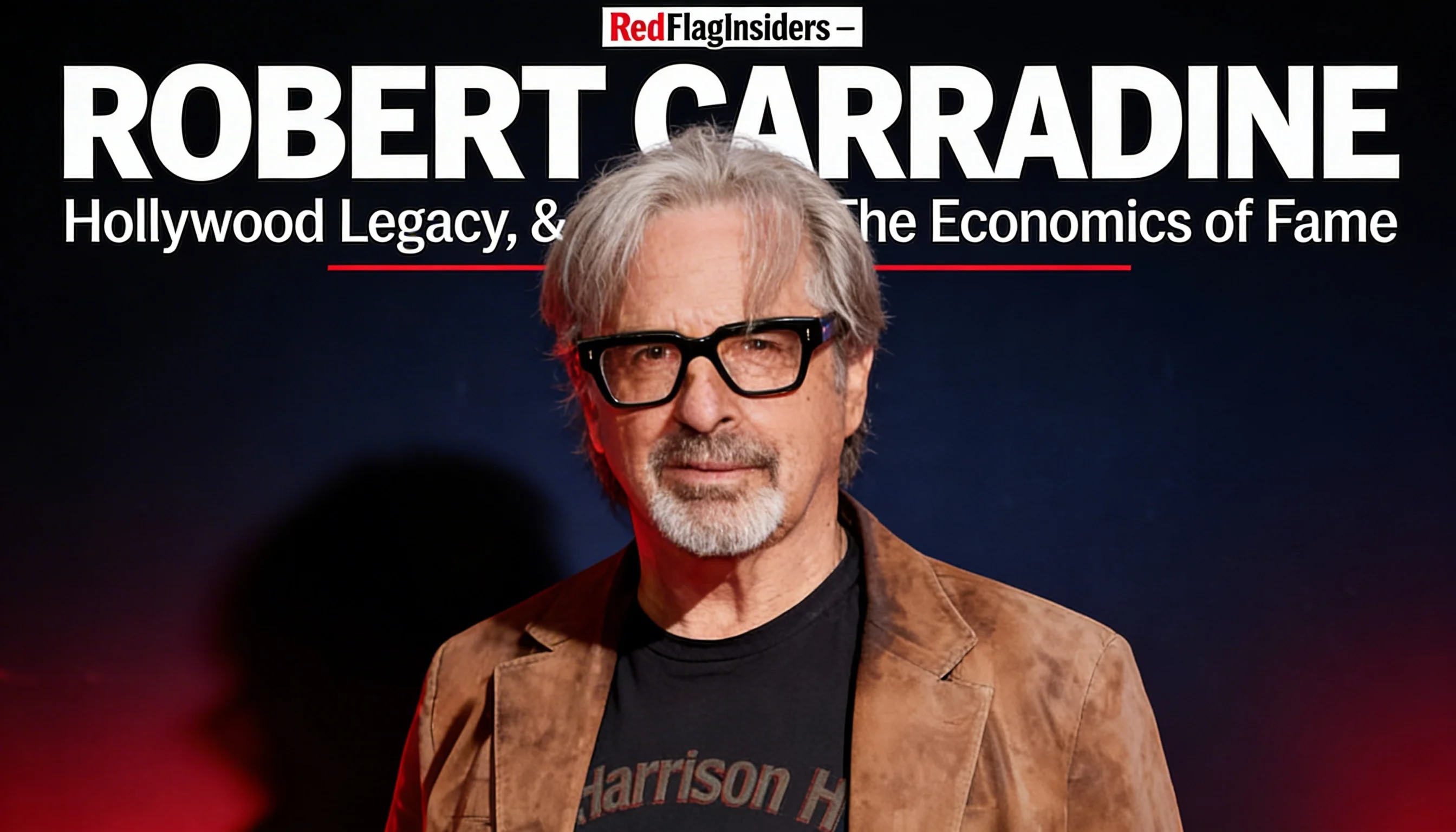
Robert Carradine: Fame, Family Legacy, and the Hidden Economics of Hollywood Longevity
Hollywood creates icons.
But it rarely guarantees stability.
For every actor who becomes culturally immortal through a defining role, there are dozens who discover that fame and financial permanence are not the same currency. Recognition can last decades. Income rarely does. Visibility can surge overnight. Negotiating leverage often fades quietly.
The career of Robert Carradine offers a powerful case study—not in scandal, not in controversy—but in structural Hollywood risk.
He is best known for portraying Lewis Skolnick in Revenge of the Nerds, a 1984 comedy that became a cult classic. Yet the real story lies not in the film’s popularity, but in what it reveals about typecasting, family legacy pressure, earnings volatility, and the economics of mid-tier celebrity life in America’s entertainment system.
This is not a critique of a performer.
It is an investigation into the machinery behind the spotlight.
Born Into a Dynasty: The Weight of the Carradine Name
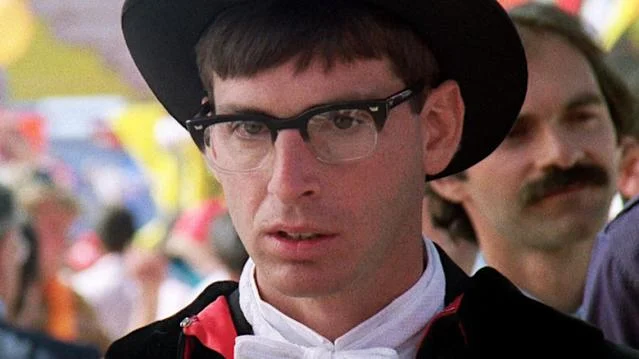
Robert Carradine was not an outsider trying to enter Hollywood. He was born into it.
Robert Carradine is the son of John Carradine, a prolific character actor with a career spanning decades. He is also the brother of David Carradine and Keith Carradine, both respected performers in their own right.
On paper, that lineage is a competitive advantage:
-
Early industry exposure
-
Built-in reputation
-
Networking access
-
Casting familiarity
But dynastic advantage carries psychological and strategic risk.
When audiences compare siblings, identity becomes relative. When producers associate a family name with a certain tone or style, deviation becomes harder. Legacy can open doors—but it can also narrow perception.
In Hollywood, perception is currency.
And inherited currency often comes with invisible expectations.
The Breakout Moment: Revenge of the Nerds
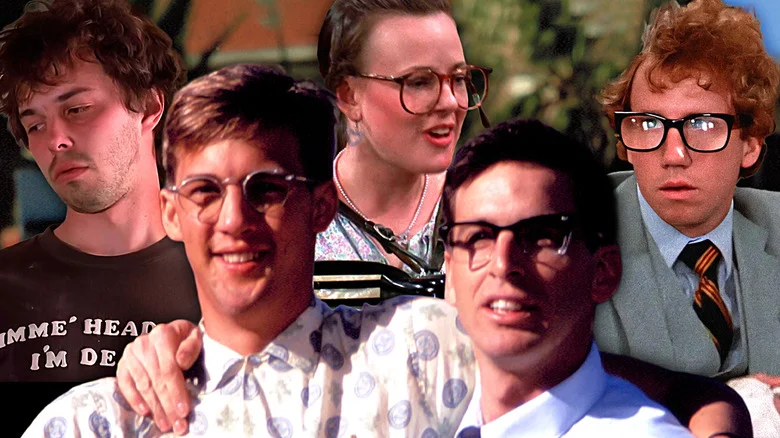
In 1984, Carradine starred in Revenge of the Nerds as Lewis Skolnick—the intelligent, socially awkward leader of a group of misfit students challenging the dominant campus hierarchy.
The film performed strongly at the box office relative to its budget and evolved into a cultural reference point for 1980s comedy. Sequels followed. The character became iconic.
From a career perspective, this moment created:
-
National recognition
-
Franchise leverage
-
Cultural imprint
-
Typecasting risk
The success of the film locked Carradine into a highly specific archetype:
The intellectual underdog.
The comedic outsider.
The soft-spoken genius.
Audiences loved it.
Hollywood replicated it.
But here lies the first systemic red flag.
When one role defines you so completely, reinvention becomes more difficult than repetition.
The Structural Mechanics of Typecasting
Typecasting is not a personal weakness. It is an industrial strategy.
Studios reduce uncertainty by repeating what works. Casting directors align actors with proven archetypes because it lowers financial risk. Audiences recognize familiarity, and familiarity sells tickets.
For actors, however, repetition can shrink range perception.
Typecasting often leads to:
-
Fewer dramatic role offers
-
Reduced ability to pivot genres
-
Lower salary growth after peak exposure
-
Creative stagnation
The market begins to see the character before it sees the performer.
Carradine’s identity became strongly tied to the “nerd hero” persona. While that created brand clarity, it also constrained casting diversity.
This is not unique to him. It is a recurring pattern in entertainment economics.
And it reveals an uncomfortable truth:
In Hollywood, early success can quietly reduce future optionality.
The Mid-Tier Celebrity Financial Cycle
Public perception often assumes that actors who star in successful films achieve permanent wealth.
The reality is more complex.
Hollywood earnings typically follow a cycle:
Phase 1: Breakout Spike
High visibility, strong negotiation leverage, peak earnings window.
Phase 2: Franchise Stabilization
Sequels, related projects, short-term revenue continuity.
Phase 3: Market Saturation
Audience interest plateaus, casting options narrow.
Phase 4: Reinvention or Contraction
Diversification into TV, directing, producing—or reduced visibility.
Actors who fail to diversify during Phase 1 often encounter financial compression during Phase 4.
While exact financial details remain private, industry averages from the 1980s indicate that mid-tier actors frequently experienced:
-
Significant upfront salary for successful films
-
Long-term reliance on residuals
-
Income volatility in later decades
Residual payments can help stabilize income, but they rarely replace peak-year earnings unless the franchise achieves extraordinary longevity.
The red flag is not income decline.
The red flag is overdependence on a single intellectual property cycle.
Television, Adaptation, and Career Extension
After the franchise era, Carradine transitioned into various television roles and supporting appearances.
Television has historically offered:
-
More consistent work
-
Lower per-project pay
-
Extended professional lifespan
For many actors, this shift represents pragmatic adaptation rather than decline.
Yet the financial math changes dramatically.
Film stardom creates concentrated earnings. Television work often creates distributed earnings.
The question becomes:
Does distributed income equal long-term security?
Only if managed strategically.
Hollywood history shows numerous performers who maintained visibility for decades yet struggled financially due to poor investment decisions, inconsistent management, or lifestyle inflation during peak years.
This is not speculation. It is documented industry reality.
Family Legacy: Advantage and Pressure
The Carradine family story illustrates another structural dynamic: legacy comparison.
When multiple siblings succeed in entertainment, individual evaluation shifts.
Was Robert Carradine measured against his own achievements—or against the broader Carradine brand?
Did the public associate him with the artistic gravitas of his father?
Did comparisons to his brothers shape casting decisions?
Family association can enhance credibility, but it can also blur differentiation.
In brand strategy terms:
Strong shared identity sometimes reduces individual market distinctiveness.
Actors with family ties must strategically carve unique positioning. Otherwise, they risk becoming a subcategory of a larger narrative.
The Cultural Shift: Reassessing 1980s Comedies
Modern audiences view certain 1980s films through a new cultural lens. Themes that were once considered harmless comedy are now debated within contemporary ethical frameworks.
This introduces another reputational risk:
Cultural reevaluation.
When a defining role becomes socially controversial decades later, actors may experience:
-
Reputation reassessment
-
Interview pressure
-
Legacy reframing
The film industry evolves. Audience standards evolve. Cultural narratives evolve.
Actors tied strongly to one project inherit those shifts.
The red flag is not past participation.
The red flag is inflexibility in narrative ownership.
Those who proactively contextualize their work tend to navigate shifts more smoothly than those who remain silent.
Streaming, Nostalgia, and the New Monetization Layer
The streaming era has changed the economics of legacy films.
Platforms revive catalog titles, introduce them to younger audiences, and monetize nostalgia.
For actors associated with cult classics, this can create:
-
Convention appearances
-
Reunion specials
-
Documentary interviews
-
Renewed residual streams
However, nostalgia is cyclical capital.
It rises when cultural memory peaks and declines when attention shifts.
The strategic question becomes:
How can legacy recognition convert into diversified revenue?
Actors who leverage brand equity into:
-
Writing
-
Speaking engagements
-
Digital media channels
-
Ownership stakes
tend to stabilize income beyond nostalgia waves.
Those who rely solely on residuals face revenue unpredictability.
Lessons in Ownership vs. Visibility
One of the most critical patterns in Hollywood economics is the distinction between visibility and ownership.
Visibility creates fame.
Ownership creates leverage.
Actors who negotiate backend participation, production stakes, or intellectual property control often achieve multi-decade financial stability.
Actors who rely primarily on performance fees face:
-
Earnings ceilings
-
Contractual limitations
-
Reduced equity accumulation
Carradine’s career prompts a broader reflection:
How many actors from the 1980s era retained meaningful ownership in their projects?
Historically, ownership opportunities were less accessible to performers without major box-office dominance.
This structural reality limited wealth scalability for many mid-tier stars.

The Psychology of Long-Term Fame
Sustaining a public identity for decades requires more than talent.
It requires adaptability.
Actors who endure often share three traits:
-
Strategic humility — willingness to accept evolving roles
-
Financial literacy — disciplined management of peak earnings
-
Brand flexibility — reinvention across genres or mediums
Carradine maintained consistent work over time. That consistency reflects professional resilience.
But resilience alone does not eliminate systemic industry volatility.
Hollywood is not a salary-based career path.
It is a project-based economy.
Project-based economies reward diversification.
Risk Signals Observed in Hollywood Career Arcs
Across decades of entertainment analysis, recurring signals appear:
• Peak earnings concentrated in one decade
• Heavy association with a single franchise
• Limited production ownership
• Transition to lower-visibility formats
• Cultural reevaluation of early work
These signals do not indicate failure.
They indicate structural vulnerability.
Understanding these patterns empowers actors, agents, and investors to design more resilient strategies.
Broader Industry Implications
Robert Carradine’s trajectory mirrors that of many capable performers who achieved early recognition but did not dominate blockbuster cycles.
The majority of working actors operate within this mid-tier category.
Their reality includes:
-
Income variability
-
Contract negotiation asymmetry
-
Agent dependency
-
Market-driven relevance
The myth of permanent celebrity wealth often obscures this complexity.
In truth, Hollywood resembles startup economics:
High risk.
High volatility.
Occasional breakout winners.
Many stable but non-exponential careers.
Actors are entrepreneurs without guaranteed product cycles.
Future Outlook: Stability Through Reinvention
Looking forward, the entertainment industry is fragmenting:
-
Streaming platforms
-
Independent content creation
-
Direct-to-audience media
-
Social brand monetization
These shifts offer performers new pathways.
The next generation of actors will likely combine:
-
Performance skills
-
Business acumen
-
Personal brand channels
-
Equity participation
The lesson from legacy careers like Carradine’s is clear:
Diversification must begin early.
Waiting until cultural visibility declines limits strategic options.
Constructive Takeaways for Creators and Industry Professionals
For Actors:
-
Negotiate backend participation when possible
-
Build personal media channels independent of studios
-
Invest peak earnings conservatively
-
Pursue genre diversity early
For Agents and Managers:
-
Encourage ownership opportunities
-
Avoid overexposure in narrow archetypes
-
Develop multi-decade positioning strategies
For Entertainment Investors:
-
Assess talent scalability beyond one franchise
-
Analyze IP retention models
-
Support cross-platform expansion
For Audiences:
-
Recognize that fame does not equal permanence
-
Understand the economics behind creative careers
A Career as a Case Study, Not a Cautionary Tale
Robert Carradine’s professional life demonstrates longevity in an industry known for short memory.
He worked steadily. He contributed to cultural touchstones. He maintained public recognition.
Yet his trajectory also illuminates structural constraints faced by actors whose identities become tightly bound to a single cultural moment.
The red flag is not starring in a cult classic.
The red flag is believing that one cultural moment secures lifetime economic certainty.
Hollywood rewards reinvention more than repetition.
Final Reflection: The Intelligence Behind the Spotlight
The story of Robert Carradine is ultimately a story about systems.
It is about how Hollywood structures opportunity.
How branding shapes destiny.
How early success can both elevate and confine.
Actors operate within an ecosystem that prioritizes novelty, profit margins, and audience retention.
Understanding that ecosystem transforms perception.
Fame becomes data.
Recognition becomes leverage.
Visibility becomes negotiable capital.
The entertainment industry will continue to produce icons.
But only those who convert icon status into ownership achieve durable autonomy.
Robert Carradine’s career offers a valuable lens into that distinction.
Not scandal.
Not sensationalism.
But structural insight.
And in the modern economy—insight is power.
Commentaires
Laisser un commentaire