
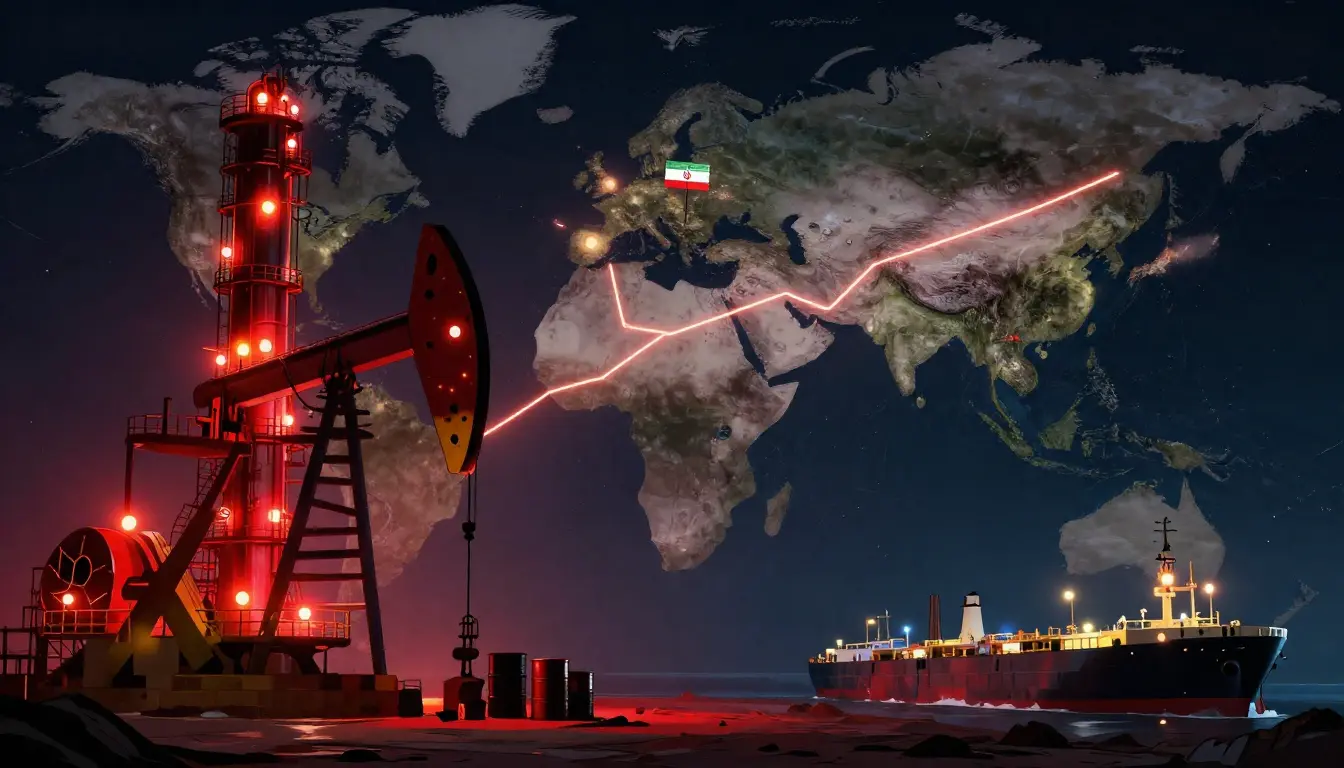
Why Energy Markets React Before Politicians
Whenever geopolitical tensions rise in the Middle East, global energy markets are often the first systems to react. Long before governments issue official statements or analysts finalize their assessments, traders and investors begin adjusting expectations.
This pattern is particularly visible during moments of tension between the United States and Iran. The relationship between the two countries has repeatedly demonstrated its ability to influence global oil prices, shipping security, and investor sentiment across energy markets.
The reason is simple. Iran sits at the center of one of the world’s most strategically important energy regions. Even small disruptions connected to the country can ripple through supply chains that feed the global economy.
At RedFlagInsiders, we examined the structural reasons why U.S.–Iran tensions continue to influence oil markets so strongly — and the signals analysts are watching to determine whether the current crisis could trigger a broader energy shock.
Why the Middle East Remains Central to Global Energy
Despite the rise of new energy producers across the world, the Middle East continues to play an outsized role in the global oil system.
Several structural factors explain this reality.
First, the region contains a significant share of the world’s proven oil reserves. Countries such as Saudi Arabia, Iran, Iraq, Kuwait, and the United Arab Emirates collectively hold enormous energy resources that continue to shape global supply expectations.
Second, the Middle East functions as a hub for large-scale export infrastructure. Tanker routes originating in the Persian Gulf deliver crude oil to Asia, Europe, and other major markets.
Third, regional production decisions often carry global influence. When output levels shift in the Middle East, the effects can quickly ripple across international energy prices For these. The geopolitical instability in Iran often results in immediate reaction from the leaders. Both traders and policymakers are giving attention. The. Points of interest for the Strait Of Hormuz.? Perhaps no.
This geographic feature better illustrates the relationship between geopolitics and energy. The Strait of Hormuz is not a substitute for other markets.
This narrow. One of the waterways that connects the Persian Gulf to the open ocean is this one. Critical oil transportation routes across the globe....
Every day, millions of. This channel facilitates the transportation of crude oil barrels to foreign destinations. Markets.
Because the strait is relatively narrow and heavily trafficked, it is also highly vulnerable to disruption. Even small security incidents in the area can create immediate concern among shipping companies and energy traders.
Energy analysts frequently describe the Strait of Hormuz as one of the most important strategic chokepoints in the global economy. Any serious disruption there could send shockwaves through oil markets worldwide.
For this reason, developments involving Iran — which sits along the northern side of the strait are watched with extraordinary attention.
How Oil Markets Respond to Geopolitical Risk
Oil markets operate differently from many other financial systems. Unlike traditional commodities that may be stored for long periods, crude oil flows continuously through complex supply networks.
When traders perceive geopolitical risk, they often respond immediately.
The most visible signal appears in crude oil futures markets. Prices for future delivery contracts tend to rise when traders anticipate possible supply disruptions.
However, futures pricing is only one part of the picture.
Energy analysts also monitor shipping activity, tanker insurance rates, and refinery demand patterns. Together, these signals help determine whether geopolitical tensions are likely to affect real-world supply.
Interestingly, markets sometimes react even before any physical disruption occurs. Perception alone can drive price movements.
Historical Oil Shocks and What They Teach Us
History offers several examples of geopolitical crises triggering major oil shocks.
During past conflicts involving Middle Eastern producers, markets often experienced rapid price spikes followed by periods of extreme volatility. Traders adjusted expectations quickly, sometimes long before the full scale of disruption became clear.
These historical events demonstrate an important principle: oil markets respond not only to actual supply interruptions but also to the possibility of disruption.
This sensitivity reflects the global economy’s dependence on stable energy flows. When supply uncertainty rises, market participants often act defensively to protect against potential shortages.
The result can be rapid price increases even in the early stages of geopolitical crises.
Market Signals Analysts Are Watching Today
As tensions between the United States and Iran evolve, analysts are monitoring several key indicators.
One of the most visible is crude oil price volatility. Sharp price movements often signal that traders are adjusting expectations about supply risk.
Another indicator involves maritime insurance premiums. Companies transporting oil through sensitive regions must insure their vessels against potential threats. Rising premiums can indicate growing concern among insurers and shipping firms.
Shipping traffic data also plays an important role. Analysts track tanker movements using satellite technology to determine whether shipping patterns are changing in response to geopolitical tension.
Together, these indicators provide valuable insight into how markets perceive the risk environment.
Could a Real Supply Disruption Occur?
Despite the dramatic headlines often surrounding geopolitical crises, analysts emphasize that actual supply disruptions remain relatively rare.
The global oil system includes several mechanisms designed to absorb short-term shocks.
Strategic petroleum reserves maintained by major economies can provide temporary supply support during emergencies. In addition, other producing countries may increase output to offset disruptions in a particular region.
However, these buffers have limits.
If tensions escalate to the point where transportation routes become unsafe or energy infrastructure is damaged, markets could face a more sustained supply challenge.
That possibility remains one of the primary reasons investors continue monitoring developments involving Iran.
The Role of Speculative Trading
Another factor influencing oil price movements during geopolitical crises is speculative trading.
Energy markets include a wide range of participants, including hedge funds, institutional investors, and algorithmic trading systems. When geopolitical risk rises, these participants often increase trading activity.
Speculative positioning can amplify price movements because traders attempt to anticipate how other market participants will react.
This dynamic can create rapid swings in oil prices, particularly during periods of uncertainty.
Importantly, speculation does not create geopolitical risk. But it can significantly magnify the financial impact of that risk.
Why Markets Sometimes Stabilize Quickly
Interestingly, many geopolitical crises that initially appear capable of triggering major oil shocks ultimately produce only temporary volatility.
Markets tend to stabilize once traders gain clearer information about the actual level of supply risk.
If shipping routes remain open and production infrastructure remains intact, prices may retreat after initial spikes.
This pattern has occurred during several past U.S.–Iran confrontation cycles. Initial fear drives volatility, but markets adjust once it becomes clear that the global supply system remains functional.
Nevertheless, every crisis is unique, and markets remain cautious until uncertainty fades.
Broader Economic Consequences of an Oil Shock
If the U.S.–Iran crisis were to produce a sustained oil shock, the economic consequences could extend far beyond energy markets.
Higher oil prices influence transportation costs, manufacturing supply chains, and consumer spending patterns across the global economy.
Inflation pressures may increase as energy costs rise. Airlines, shipping companies, and logistics networks often feel immediate financial impact.
Central banks may also face more complicated policy decisions if energy-driven inflation begins influencing broader economic indicators.
These ripple effects explain why geopolitical tensions involving major oil producers attract such intense attention from policymakers and financial institutions.
The Role of Information and Market Psychology
Modern financial markets operate in a fast-moving information environment.
News headlines, analyst commentary, and social media discussions can influence investor sentiment within minutes. During geopolitical crises, information flows often become chaotic and emotionally charged.
As we explored in our analysis of digital outrage dynamics, emotionally intense narratives tend to spread rapidly online. These narratives can shape market psychology even before full facts are available.
In this environment, perception sometimes becomes as powerful as reality.
Investors may react to the possibility of disruption long before any confirmed supply interruption occurs.
Why Energy Markets Remain on Alert
The evolving tensions between the United States and Iran once again highlight the fragile connection between geopolitics and global energy markets.
Even in an era of diversified energy production, the Middle East remains deeply embedded in the structure of the global oil system. Strategic chokepoints, major reserves, and complex shipping networks ensure that regional instability continues to influence global prices.
For now, markets appear cautious rather than panicked. But traders, analysts, and policymakers remain alert for signals that could indicate rising supply risk.
At RedFlagInsiders, the central lesson remains clear: oil markets rarely wait for certainty before reacting. They move based on perceived risk, historical precedent, and the possibility that geopolitical tensions might disrupt one of the world’s most critical economic lifelines
Commentaires
Laisser un commentaire