
Markets Often React Before Governments
Financial markets have a unique way of interpreting geopolitical events. Long before governments release official strategies or diplomatic negotiations begin to shape outcomes, investors start translating global tensions into numbers, charts, and trading decisions.
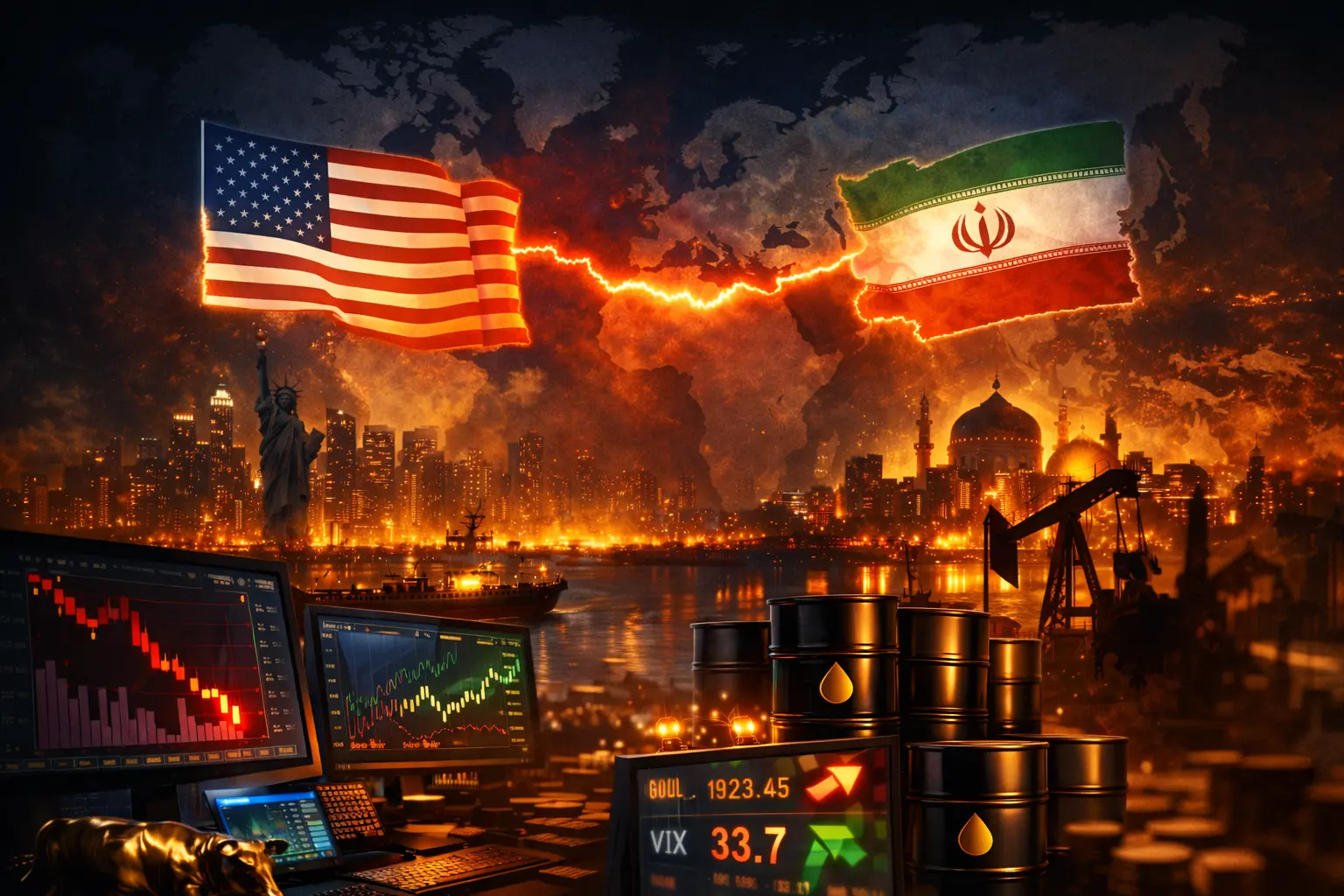
This pattern becomes especially visible when tensions rise between major geopolitical actors. In recent weeks, the evolving confrontation between the United States and Iran has captured the attention of analysts, investors, and economic observers across the world.
While political headlines often focus on military developments, diplomatic statements, or regional tensions, financial markets tend to look deeper. Investors ask a different set of questions. They want to understand how geopolitical developments might affect supply chains, energy prices, investor confidence, and the broader global economy.
Understanding how markets interpret geopolitical risk offers an important perspective on how serious a crisis might become. Markets are not perfect predictors, but they often provide early signals about how institutional investors view unfolding events.
At RedFlagInsiders, we examined how financial markets are currently reacting to the rising tensions between Washington and Tehran, and which indicators analysts are watching most closely.
Why Geopolitical Risk Moves Markets
Geopolitical tensions can influence financial markets through several different channels. The most important factor is uncertainty.
Markets operate best when investors can make reasonably accurate predictions about the future. When geopolitical tensions rise, that predictability weakens. Investors begin reassessing potential risks across multiple sectors of the global economy.
Several key questions begin to shape investor thinking:
- Could energy supplies be disrupted?
- Could trade routes become unstable?
- Could transportation costs increase?
- Could inflation rise due to higher commodity prices?
- Could global economic growth slow down?
Each of these questions carries financial consequences.
Geopolitical crises rarely affect just one market. Instead, they create ripple effects that move through commodities, equities, currencies, and bond markets simultaneously.
Oil Markets: The First Signal Investors Watch
One of the earliest financial indicators of geopolitical tension usually appears in oil markets.
Iran sits at the center of one of the world's most important energy regions. The Middle East remains a major source of global oil production, and transportation routes passing near Iran are critical for international energy supply.
When tensions involving Iran rise, oil traders begin assessing the risk that supply routes could become unstable.
This often leads to higher crude oil futures prices. Futures contracts represent expectations about future supply and demand conditions, so rising geopolitical risk can push prices upward even before any real disruption occurs.
Energy traders understand that oil markets can react rapidly to instability. Even rumors of disruption in the Strait of Hormuz — one of the world’s most important oil shipping routes — can trigger volatility.
However, oil markets are also known for adjusting quickly if it becomes clear that supply flows remain stable.
Equity Markets and Sector Reactions
Stock markets tend to react in more complex ways to geopolitical crises.
When uncertainty increases, investors sometimes reduce exposure to risky assets such as equities. This behavior can push major stock indexes lower, particularly if investors fear economic slowdown.
However, not all sectors respond the same way.
Some industries may actually benefit from geopolitical tension. Defense companies, for example, sometimes experience increased investor interest during periods of rising global conflict risk.
Firms involved in military technology, aerospace systems, cybersecurity, and security infrastructure may see increased demand expectations.
Meanwhile, industries that depend heavily on global trade or travel — such as airlines, tourism, and international logistics — may experience investor caution if geopolitical tensions threaten transportation routes.
These contrasting reactions demonstrate how geopolitical events can produce very different outcomes across sectors.
Safe Haven Assets During Geopolitical Stress
When geopolitical uncertainty rises, investors often move money into assets perceived as relatively stable.
These are commonly referred to as safe-haven assets.
Historically, several investments have played this role during periods of global tension:
- Gold
- U.S. Treasury bonds
- Certain stable currencies
Gold has long been viewed as a store of value during uncertain periods. When investors become concerned about geopolitical stability, gold demand often increases.
Government bonds can also attract attention because they are considered relatively low-risk investments compared to equities.
These shifts in investor behavior can provide valuable insight into how seriously markets are taking geopolitical developments.
Currency Market Reactions
Foreign exchange markets also react to geopolitical events.
Currencies associated with regions experiencing instability may experience volatility. At the same time, investors often move capital toward currencies associated with larger or more stable economies.
The U.S. dollar frequently benefits from this dynamic because it remains the dominant currency used in international trade and financial transactions.
However, currency markets are influenced by many factors beyond geopolitics. Interest rate expectations, central bank policies, and economic data all play important roles.
For this reason, analysts rarely interpret currency movements as a single indicator of geopolitical risk.
Volatility Indicators and Market Psychology
Another useful tool for understanding market reactions is the volatility index.
Volatility indicators measure how much price movement investors expect in the near future. When geopolitical tensions increase, these indicators often rise because traders anticipate greater uncertainty.
Higher volatility reflects market psychology as much as economic fundamentals.
Investors adjust their expectations based on possible scenarios rather than confirmed outcomes. This anticipation can lead to rapid price swings across multiple markets.
However, volatility often decreases once clearer information becomes available and uncertainty begins to fade.
Institutional Risk Modeling
Large financial institutions rely on sophisticated risk models to evaluate geopolitical developments.
These models combine economic indicators, historical data, and scenario analysis to estimate how potential events could influence markets.
For example, analysts may examine how a sustained oil price increase could affect inflation or how transportation disruptions could influence corporate supply chains.
Risk models do not predict the future perfectly. Instead, they help institutions prepare for multiple possible outcomes.
During periods of geopolitical tension, these models allow investors to evaluate best-case and worst-case scenarios simultaneously.
Information Speed and Market Reactions
Modern financial markets operate in an environment where information travels extremely quickly.
News reports, analyst commentary, and social media discussions can influence investor sentiment within minutes. During geopolitical crises, this rapid information flow can amplify market reactions.
As discussed in our analysis of The Hidden Psychology Behind America’s Viral Outrage Machine, emotionally intense narratives can spread rapidly online.
When investors encounter dramatic headlines or viral footage related to geopolitical conflict, markets may react immediately — sometimes before the full facts are confirmed.
This dynamic can create temporary volatility that stabilizes once clearer information becomes available.
Lessons From Previous Geopolitical Crises
History provides several examples of how markets respond to geopolitical crises.
In many cases, initial reactions involve sharp price movements followed by gradual stabilization. Investors often react quickly to uncertainty but adjust positions once they gain clearer understanding of the situation.
During previous periods of U.S.–Iran tension, markets have experienced volatility but often avoided long-term disruption once diplomatic pressure reduced escalation risk.
However, every geopolitical situation is unique. Market outcomes depend heavily on how tensions evolve over time.
Could Market Reactions Become More Severe?
If tensions between the United States and Iran escalate significantly, financial markets could face more sustained pressure.
Higher oil prices could increase inflation across multiple economies. Supply chain disruptions could affect transportation and manufacturing sectors.
Investor confidence could weaken if geopolitical tensions begin affecting global trade flows.
However, the severity of these effects depends largely on whether geopolitical tensions translate into real economic disruption.
Many geopolitical crises create market volatility without producing long-term economic damage.
Markets Are Watching the Signals
The current tensions between the United States and Iran illustrate how closely financial markets monitor geopolitical developments.
Oil prices, equity sector movements, safe-haven asset demand, and currency fluctuations all provide clues about how investors interpret global risk.
At the moment, markets appear cautious but not alarmed. Investors are adjusting expectations while waiting for clearer signals about how the situation might evolve.
At RedFlagInsiders, the key lesson remains consistent: financial markets rarely ignore geopolitical risk. Instead, they continuously interpret global events through economic signals that ripple across the global financial system.
Whether the current tensions stabilize or intensify, market reactions will likely remain one of the most important indicators of how serious the situation may become
Commentaires
Laisser un commentaire